
Southeast Asia’s greatest travel experiences often transcend national borders. While Vietnam alone captivates millions annually, the region’s true magic emerges when you combine Vietnam with neighboring Cambodia and Laos into cohesive, transformative journeys. This comprehensive guide explores the most stunning cross-border routes, cultural connections, and practical logistics that enable international travelers to experience Southeast Asia’s full complexity. Partnering with best Vietnam tour companies that specialize in multi-country itineraries transforms these ambitious journeys from logistically overwhelming into seamlessly orchestrated adventures.
Understanding the Cross-Border Travel Opportunity
Vietnam, Cambodia, and Laos share profound historical, cultural, and geographical connections that make Vietnam to Cambodia Laos tours more than mere sightseeing-it becomes a complete regional education. The three nations follow distinct development trajectories, preserve varying degrees of traditional culture, and present dramatically different natural landscapes. Experiencing all three through Vietnam to Cambodia Laos tours creates context impossible when visiting countries individually.
International travelers often default to Vietnam-only itineraries because planning Vietnam to Cambodia Laos tours feels overwhelming. Visa requirements differ by nationality. Border crossings involve logistical complexity. Transportation coordination becomes intricate. Currency exchanges fluctuate. Languages shift repeatedly. These legitimate concerns deter many travelers from attempting regional journeys through multi-country itineraries.
However, the investment in planning Vietnam to Cambodia Laos tours yields extraordinary returns. You’ll understand how colonial history affected each nation differently. You’ll recognize cultural threads connecting peoples despite political boundaries. You’ll witness how development choices create contrasting environments. You’ll appreciate regional geography as integrated whole rather than isolated destinations.
The most successful Vietnam to Cambodia Laos tours require guides who understand not just individual countries but regional relationships. Professionals specializing in multi-country tours possess knowledge extending across borders-understanding visa processes, maintaining relationships with transport operators across countries, knowing which border crossings function most smoothly, and orchestrating logistics that create seamless experiences despite bureaucratic complexity. This expertise transforms potential stress into adventure.
The Classic Vietnam-Cambodia-Laos Triangle Route
The most popular multi-country circuit connects Vietnam’s highlights with Cambodia’s temples and Laos’s natural beauty into a logical geographic progression. This route typically flows from Ho Chi Minh City through the Mekong Delta into Cambodia, then northward toward Laos, potentially returning through Vietnam’s central highlands.
Ho Chi Minh City to Phnom Penh: The Mekong Journey
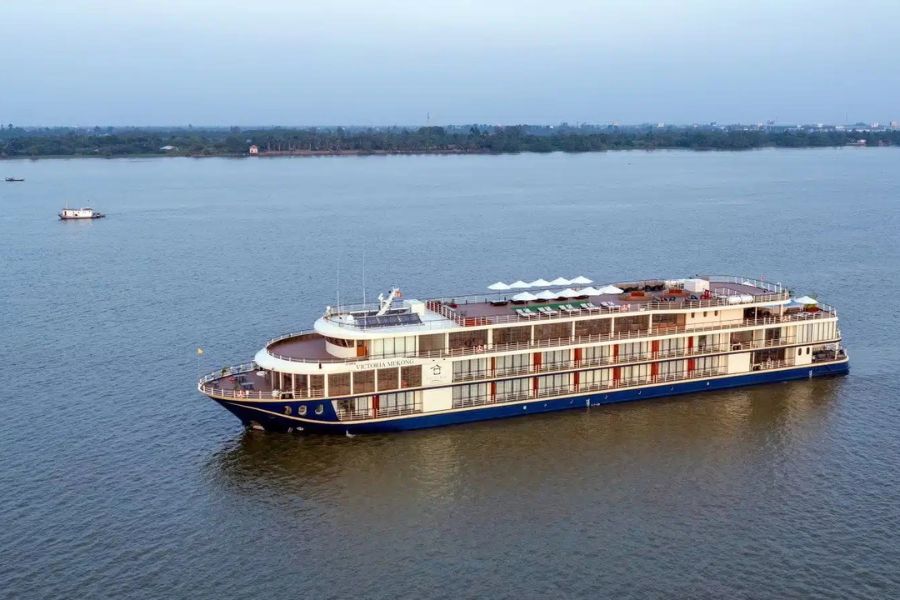
The southern portion of this classic route begins in Vietnam’s largest city and flows through Southeast Asia’s most significant river system. Ho Chi Minh City itself-sprawling, chaotic, energetic-provides orientation to modern Vietnam. However, the real journey begins when you leave the city and enter the Mekong Delta’s waterways.
The Mekong Delta represents Vietnam’s agricultural heartland and cultural distinctive region. Traveling through narrow canals flanked by stilt houses, coconut plantations, and fishing operations, you’ll witness daily life largely unchanged for generations. Early morning visits to floating markets reveal commerce happening on water-vendors paddling boats laden with produce, families conducting business from wooden vessels, children navigating waterways with practiced ease.
The transition from Vietnam into Cambodia happens gradually and then suddenly. You’ll cross the Mekong River at official border crossings, complete immigration procedures, and discover Cambodia’s landscape mirrors yet diverges from Vietnam’s. Rivers remain, but development patterns differ. Architecture shifts. Languages change. Food flavors adjust. These transitions mark genuine boundaries between countries while highlighting regional continuities.
Phnom Penh, Cambodia’s capital, presents Southeast Asia’s history in visceral, challenging ways. The Royal Palace demonstrates Cambodia’s royal tradition and architectural sophistication. The National Museum houses Khmer classical art. However, the Genocide Museum and Killing Fields document Cambodia’s devastating twentieth-century history with honesty that transforms casual tourism into genuine historical reckoning. Understanding Cambodia requires confronting this history-acknowledging it, learning from it, respecting its weight.
Phnom Penh to Siem Reap: Temple Country
Northern Cambodia beckons with Angkor Archaeological Park, one of humanity’s greatest architectural achievements. The temple complex-built across centuries during the Khmer Empire’s height-demonstrates engineering sophistication, artistic mastery, and spiritual vision that rivals history’s greatest construction projects.
Most travelers experience Angkor through organized tours departing Siem Reap, the nearby town that has developed significant tourism infrastructure. However, Angkor transcends typical tourism because the temples are simply that extraordinary. Watching sunrise illuminate Angkor Wat’s towers, exploring jungle-reclaimed temples where roots embrace ancient stones, and contemplating human achievement and inevitable decline amid these structures creates experiences that resist superficiality.
The journey from Phnom Penh to Siem Reap traverses Cambodia’s countryside, passing through landscapes recovering from war’s devastation decades earlier. Landmine awareness signs still mark certain areas. Infrastructure remains basic in many regions. Yet communities thrive-children attend school, farmers work fields, markets bustle with commerce. Cambodia’s resilience becomes evident through observation.
Siem Reap to Laos: Border Crossing into Gentler Territory
The transition from Cambodia into Laos marks a shift toward lower-development-impact tourism and mountainous terrain. The overland route from Siem Reap toward Laos passes through increasingly rural landscape. Border crossings at places like Prek Chak involve genuine bureaucratic processes but lack the chaos of major crossings.
Laos immediately feels different. The pace slows noticeably. Commercial pressure diminishes. Development seems less aggressive. The landscape becomes more mountainous. Fewer international tourists populate streets. The Lao language, distinct from Vietnamese and Cambodian, marks genuine cultural boundary. These differences aren’t better or worse than neighboring countries-they’re simply different, and experiencing the contrast creates regional understanding.
The Northern Route: Hanoi Through Laos to Bangkok
Alternative cross-border routing begins in northern Vietnam, moves through Laos’s interior, and potentially continues into Thailand. This route suits travelers interested in mountainous terrain, minority cultures, and less-visited regions.
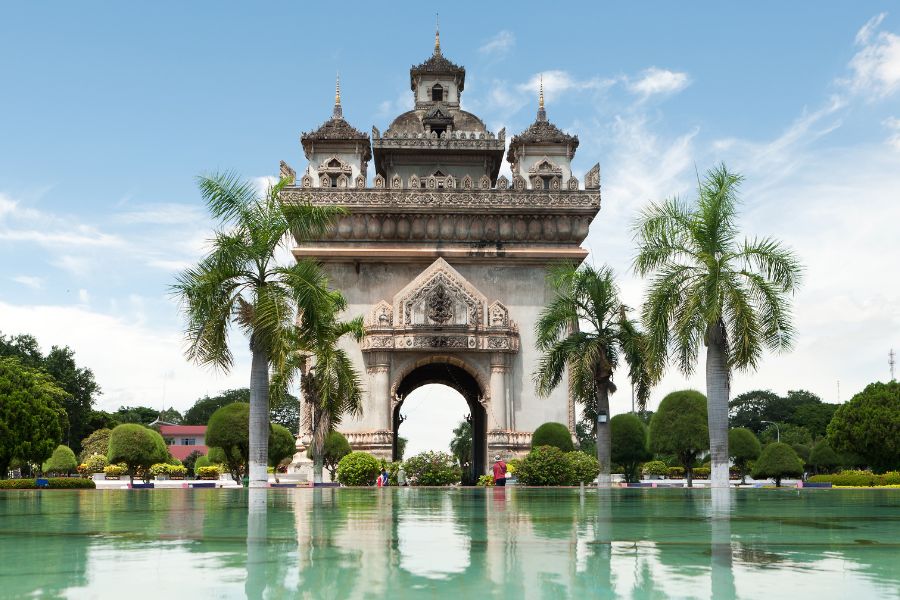
Hanoi to Vientiane: Gateway Cities
Hanoi, Vietnam’s capital, presents the country’s history, culture, and contemporary identity more completely than Ho Chi Minh City. The Old Quarter’s narrow streets, French colonial architecture, traditional crafts, and indigenous commerce create layered atmosphere. Hoan Kiem Lake’s spiritual significance and surrounding culture reflect Vietnam’s spiritual traditions. Museums document national history from ancient times through contemporary period.
The journey from Hanoi toward Laos involves traveling through Vietnam’s northern highlands-regions of natural beauty and ethnic diversity. Routes through Ha Giang, Sapa, or Dien Bien Phu introduce minority cultures (H’Mong, Tay, Thai communities) and mountainous landscape before crossing into Laos.
Vientiane, Laos’s capital, surprises many visitors with its understated charm. Rather than aggressive development, Vientiane maintains colonial architecture, tree-lined streets, and relaxed pace. Temples throughout the city reflect Buddhism’s significance in Lao culture. The Mekong River, forming the boundary with Thailand, dominates the city’s geography and consciousness. Vientiane lacks the frenetic energy of Hanoi or Ho Chi Minh City-it feels like stepping back in time to Southeast Asia before rapid modernization.
Vientiane to Luang Prabang: The Laos Journey
The route from Vientiane north to Luang Prabang represents one of Southeast Asia’s great journeys. The Mekong River journey-via boat or road alongside the river-passes through increasingly mountainous landscape. Small villages appear rarely. Jungle encompasses the route. Wildlife occasionally appears. The pace becomes contemplative.
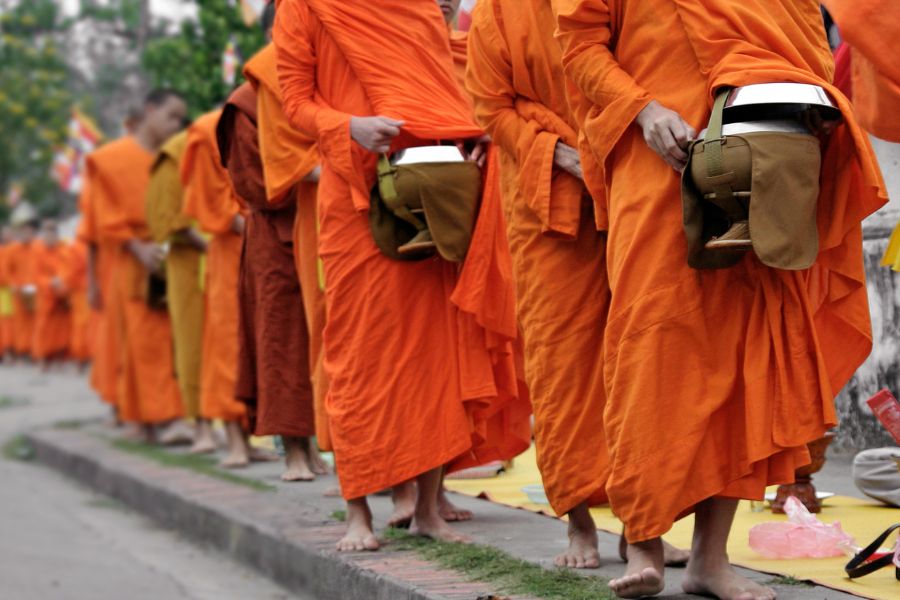
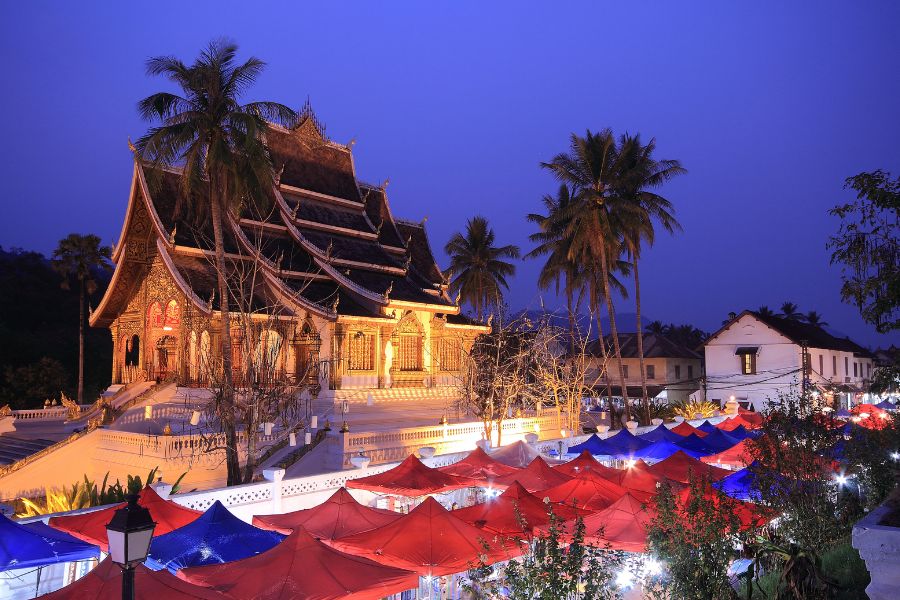
Luang Prabang, Laos’s cultural and spiritual heart, was designated a UNESCO World Heritage Site because its entire old town maintains traditional Lao architecture and religious character. Buddhist temples proliferate throughout the town-over thirty wats maintain active religious communities. Morning alms-giving ceremonies, where monks in saffron robes proceed through streets collecting offerings, reflect spiritual practices continuing as they have for centuries.
The Mekong River at Luang Prabang provides contemplative focus. Sunset views, morning mist, and the river’s gentle flow create atmosphere distinct from Southeast Asia’s busier regions. Rock formations at Pak Ou Caves house thousands of Buddha statues in caverns sacred to Lao Buddhism. Kuang Si Waterfalls present pristine natural beauty unusual for major tourist destinations.
Luang Prabang’s tourism infrastructure remains relatively modest, creating opportunities for genuine interaction with residents and monks. Many visitors volunteer teaching English at local schools, participate in community activities, and develop relationships extending beyond transactional tourism. The town’s smaller size and spiritual focus encourage slower travel-most travelers spend multiple days rather than rushing through.
The Scenic Route: Vietnam’s Central Highlands to Cambodia
A less-traveled but increasingly popular route moves through Vietnam’s central highlands-home to coffee plantations, cool-weather crops, and ethnic minorities-before descending into Cambodia. This route suits travelers seeking natural beauty and cultural diversity.
Dalat: Mountain Retreat in Tropical Country
Dalat sits in the southern highlands at elevation creating perpetually cool climate-unusual for Vietnam. French colonizers established the city as retreat from lowland heat, developing architecture and culture reflecting French influence. Pine forests, lakes, and flower gardens create landscape reminiscent of European highlands transplanted to tropical location.
Dalat’s cool weather permits cultivation of temperate-zone crops-strawberries, apples, avocados-creating agricultural landscape distinct from Vietnam’s lowlands. Visiting local markets reveals produce impossible in hot regions. Staying in French-colonial-style villas, riding motorcycles through pine forests, and exploring waterfalls in mountainous terrain creates experience uniquely positioned within Vietnam.
The highlands surrounding Dalat contain ethnic minority communities (Koho, Tay, Thai groups) maintaining traditional practices despite modernization pressures. Visiting communities respectfully requires guides understanding cultural protocols and maintaining positive relationships enabling visitors without exploiting communities.
Highlands to Cambodian Border: Gradual Transition
The route southward from Dalat toward Cambodia passes through increasingly rugged terrain, passing through Dak Lak Province’s coffee plantation region and into mountainous areas bordering Cambodia. The landscape transitions from managed agricultural land toward wild jungle. Development decreases. Tourist presence diminishes. You’re moving toward Southeast Asia’s frontier regions.
Border crossings into Cambodia at locations like Cai Yank involve less-developed infrastructure than major crossings. Logistics become more challenging. This is precisely why engaging experienced guides makes substantial difference-they understand border procedures, maintain relationships with local officials enabling smooth passage, and handle unexpected issues creatively.
Once across the border into Cambodia’s northeastern provinces (Mondol Kiri, Kratie), you encounter landscape and cultures dramatically different from developed regions. Elephant sanctuaries operate in these provinces-legitimate operations enabling encounters with these magnificent creatures while supporting conservation. Indigenous Bunong people maintain traditional practices in these remote regions. Waterfalls cascade through jungle. Wildlife diversity increases substantially.
The Extended Route: Vietnam, Laos, Cambodia, and Thailand
Ambitious travelers with time and flexibility can construct circular journeys incorporating all four mainland Southeast Asian countries. Such itineraries create complete regional understanding while presenting logistical complexity requiring professional coordination.
Routing Considerations
Four-country journeys typically follow logical progressions minimizing backtracking. Popular versions include:
Starting in Bangkok, moving north through Thailand into Laos, continuing to Vietnam, then returning south through Cambodia before returning to Thailand. Alternatively, beginning in Hanoi, moving through Laos to northern Thailand, returning through Laos to southern Vietnam, then into Cambodia before exiting or continuing regionally.
The optimal routing depends on entry/exit points, available time, traveler interests, and seasonal considerations. Professional tour operators specializing in multi-country itineraries possess expertise determining ideal progressions based on these factors.
Timing and Seasonal Factors
Southeast Asian monsoon patterns affect regional travel differently. The dry season (roughly November through March) offers optimal conditions throughout the region-comfortable temperatures, minimal rainfall, good visibility. The hot season (April-May) brings extreme heat, particularly to lowland areas. The wet season (June-October) creates lush landscapes but challenges overland travel due to flooding and road conditions.
Different regions experience monsoons differently. Northern mountains receive heavy rainfall during wet season while southern lowlands might be relatively dry. Understanding these variations enables routing trips to avoid worst conditions while capturing each region during optimal season. This meteorological knowledge distinguishes professional tour operators from casual planners.
Practical Logistics of Multi-Country Travel
Successfully executing multi-country journeys requires addressing numerous practical considerations that can overwhelm independent planners.
Visa and Immigration Requirements
Vietnam, Cambodia, and Laos all require visas for most international travelers, with specific requirements varying by nationality. Visa acquisition processes differ-some countries allow on-arrival visas at border crossings, others require pre-acquisition through embassies. Processing times, costs, and required documentation vary significantly.
Professional tour operators understand these requirements intimately for diverse nationalities. They maintain relationships with consulates enabling efficient visa processing. They understand which border crossings accommodate on-arrival visas and which require advance acquisition. They anticipate challenges specific to certain nationalities and prepare solutions accordingly.
Transportation Coordination
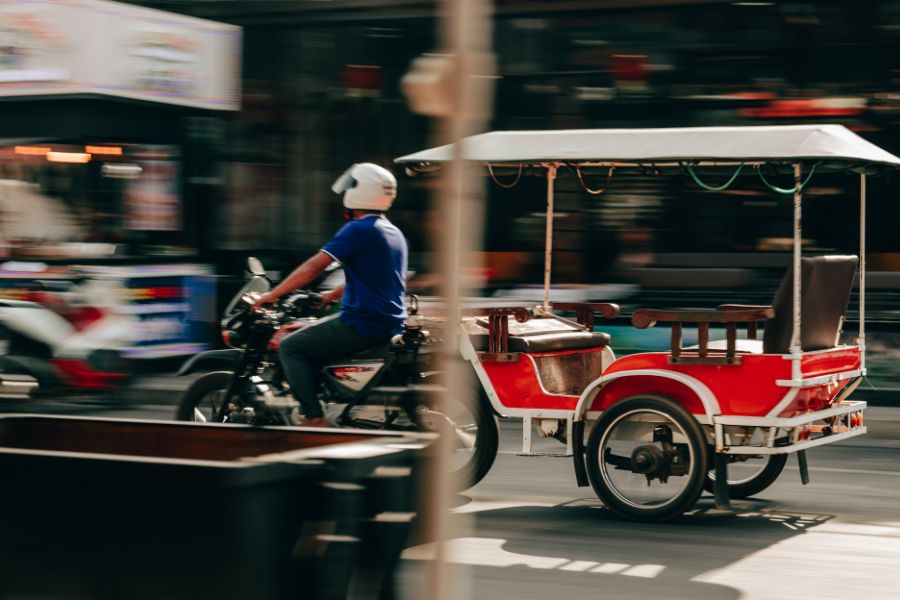
Moving across three or four countries requires coordinating multiple transportation types-international flights, buses, boats, private vehicles, motorcycles. Each leg involves different operators, scheduling, and reliability factors. Independent travelers coordinating these independently risk logistical failures-missed connections, unreliable operators, breakdowns without backup plans.
Professional operators maintain relationships with transportation providers across regions. They book reliable operators. They build buffer time into itineraries enabling flexibility when delays occur. They coordinate logistics creating seamless progression rather than disjointed segments. They possess contingency knowledge-alternative routes if primary options become unavailable, backup transportation if scheduled transport fails.
Accommodation Selection
Multi-country journeys traverse regions with vastly different accommodation infrastructure. Major cities offer multiple options across comfort/price spectrum. Remote areas might offer basic guesthouses or homestays. Understanding accommodation availability, quality, and appropriateness for different journey segments requires regional knowledge.
Professional operators curate accommodation creating experiences aligned with itinerary themes. They maintain relationships with local operators ensuring quality and supporting local economy. They understand which accommodations offer authentic cultural experiences versus tourism-focused commercialization. They book properties enabling visitors without consuming available community resources.
Guide Services and Language Support
Meaningful engagement with destinations requires communication. English proficiency decreases dramatically outside major cities. Professional guides provide translation, cultural context, and logistical support. Multi-country guides require diverse language capabilities and cross-border knowledge-rarer specialization than single-country expertise.
The best guides possess deep regional knowledge, genuine relationships with communities, and commitment to sustainable tourism principles. They educate visitors about responsible behavior, advocate for community wellbeing against commercialization pressures, and facilitate interactions feeling reciprocal rather than transactional.
Cultural Connections Across Borders
Understanding Vietnam, Cambodia, and Laos requires recognizing how shared history, colonial experiences, and regional relationships shaped distinct societies.
Colonial Legacy and Its Aftermath
French colonization affected all three countries, establishing administrative systems, infrastructure, and cultural influences that persisted after independence. However, the colonial period’s end diverged dramatically. Vietnam fought a devastating war (called the American War locally, the Vietnam War internationally) lasting until 1975. Cambodia experienced the Khmer Rouge regime’s genocide immediately following the American War. Laos experienced civil conflict and communist transition less violently than neighbors.
These divergent post-colonial experiences created distinct contemporary societies. Vietnam’s rapid modernization follows centralized planning prioritizing economic development. Cambodia’s reconstruction involves slower development tempered by trauma’s ongoing processing. Laos maintains more traditional patterns partly due to deliberate development choices and partly due to resource constraints. Understanding these differences requires historical context-why Vietnam appears more developed isn’t random; it reflects specific policy choices and external support.
Religious and Spiritual Traditions
Buddhism shapes religious life in all three countries, though practice varies. Vietnam’s Buddhism incorporates indigenous spiritual traditions, ancestor veneration, and Confucian ethics creating a syncretic system. Cambodia’s Theravada Buddhism emphasizes monastic tradition and temple communities as cultural centers. Laos’s Buddhism similarly emphasizes monastic traditions while incorporating spirit beliefs (phi worship) in folk practice.
Visiting temples, observing monk communities, and understanding Buddhist philosophy across contexts enables recognizing unity within diversity. You’ll see how Buddhism creates a shared cultural foundation while manifesting distinctly in each society. This understanding deepens appreciation for spiritual traditions often reduced to tourist photo opportunities.
Shared Food Culture with Regional Variations
Southeast Asian cuisine shares common elements-rice staples, fish sauce ubiquity, fresh herb emphasis, balance between flavors-while varying distinctly. Vietnamese cuisine emphasizes fresh herbs, fish sauce, and acidic components (lime, vinegar). Cambodian cuisine incorporates more fish-based products (dried fish, fermented paste) and coconut. Lao cuisine emphasizes sticky rice, grilled preparations, and fiery chili intensity.
Traveling through all three countries enables recognizing these variations, understanding how geography and agriculture shape cuisine, and appreciating regional sophistication that casual tourism often misses. Markets in each country display distinctive products. Restaurants serve regional specialties unavailable elsewhere. Understanding food creates sensory connection to place beyond visual observation.
When to Visit and Seasonal Advantages
Timing multi-country journeys involves balancing competing considerations-weather patterns, festival calendars, peak tourism periods, and personal schedule constraints.
Dry Season (November to March): Prime Travel Period
The dry season offers optimal conditions throughout Southeast Asia-comfortable temperatures, minimal rainfall, clear skies, and good visibility for photography and sightseeing. However, this season also brings peak tourism-crowded temples, expensive accommodations, and commercialized experiences.
Dry-season travel suits travelers prioritizing comfort and comprehensive sightseeing over crowd avoidance. Professional operators can strategize avoiding peak-crowd times-visiting temples early morning before organized groups arrive, accessing less-famous sites, and building itineraries minimizing simultaneous presence with other tourists.
Shoulder Seasons (April-May, September-October): Compromise Options
Shoulder seasons offer fewer tourists, lower prices, and moderate weather conditions. April-May involves hot temperatures, particularly in lowlands, but fewer travelers. September-October offers green landscapes from recent rains, moderate weather in mountains, and genuine tourism absence in many regions.
Shoulder-season travel suits independent travelers comfortable with heat and occasional rain, appreciating lower costs, and preferring authentic interactions over comfort maximization.
Festival Periods: Culturally Rich Timing
Regional festivals create opportunities for cultural immersion unavailable during non-festival periods. Lunar New Year (January-February, dates vary), Water Festival (November, Cambodia), and Buddhist festivals throughout the year offer chances to witness spiritual traditions, celebrate with communities, and understand cultural significance beyond touristic observation.
Professional operators timing itineraries around festivals possess expertise ensuring visitors experience celebrations respectfully-understanding protocols, knowing which events welcome visitors versus community-only observances, and facilitating participation enabling genuine cultural exchange.
Responsible Tourism Across Borders
Multi-country travel increases cumulative environmental and cultural impacts. Responsible travel choices compound across multiple nations and contexts.
Minimizing Environmental Impact
Long-distance travel inherently creates carbon footprints. However, route optimization, transportation choices, and activity selection minimize unnecessary impact. Staying longer in fewer locations reduces transportation frequency. Choosing bus/boat travel over flights reduces per-person carbon intensity. Selecting environmentally conscious accommodations and operators supports sustainability.
Professional operators prioritizing sustainability make these calculations systematically-optimizing routes, selecting low-impact transportation, partnering with eco-conscious operators, and educating visitors about personal environmental responsibility.
Supporting Local Communities Equitably
Tourism creates economic opportunities but also risks commodifying culture and creating economic inequality. Equitable tourism ensures communities benefit directly, maintain agency over their representation, and make informed choices about tourism engagement.
This requires hiring local guides, staying in locally-operated accommodations, purchasing from local artisans, and eating at family restaurants rather than international chains. It requires respecting communities’ boundaries-photographing people only with permission, understanding which activities are culturally appropriate, and recognizing that tourism should serve community interests not override them.
Choosing Tour Operators for Multi-Country Journeys
Successfully executing ambitious cross-border itineraries depends critically on selecting operators possessing necessary expertise and values alignment.
Key Qualities in Professional Operators
Legitimate multi-country specialists possess deep regional knowledge extending across all involved countries. They maintain relationships with local communities, transport operators, and accommodation providers enabling seamless coordination. They prioritize sustainable tourism-managing environmental impact and ensuring equitable community benefit. They possess genuine cultural respect, educating visitors about responsible behavior and advocating against exploitative practices.
Professional operators should be able to articulate their philosophy clearly-explaining how they select partners, structure itineraries ethically, and measure tourism impacts. They welcome questions about sustainability, community relationships, and decision-making processes.
Red Flags to Avoid
Be cautious of operators offering unrealistically low prices-sustainable, ethical tourism costs more because it prioritizes quality and fairness. Avoid operators emphasizing tourism volume over experience depth. Be skeptical of operators unable to articulate clear community partnerships or sustainability commitments. Avoid operators promising to show you “authentic” experiences through commercialized performances-genuine authenticity doesn’t require packaging.
Conclusion: Multi-Country Journeys as Regional Education
Vietnam, Cambodia, and Laos collectively comprise Southeast Asia’s cultural and geographic heart. Individual country visits provide valuable experiences; Vietnam to Cambodia Laos tours create comprehensive understanding impossible otherwise. These ambitious journeys require logistical sophistication, cultural sensitivity, and professional support enabling success.
Traveling across these borders through Vietnam to Cambodia Laos tours means witnessing distinct histories creating contemporary societies, observing how development choices shape landscapes and communities, and recognizing cultural unity despite political boundaries. You’ll understand colonial legacy’s continuing influence, Buddhism’s regional significance, and how geography shapes culture. You’ll meet communities maintaining traditions while adapting to modernity. You’ll challenge your assumptions about progress and development.
Such journeys transform casual tourism into genuine education. They require investment-financial, temporal, and emotional. They demand flexibility when plans shift, humility when cultural differences perplex you, and openness to perspectives unfamiliar to your background. Planning Vietnam to Cambodia Laos tours offers returns impossible to quantify-expanded understanding, deepened humanity, and perspective shifts approaching wisdom.
Professional guides and operators specializing in multi-country experiences provide expertise transforming ambitious plans into seamless reality. Their regional knowledge, community relationships, and logistical sophistication create conditions enabling genuine engagement with places and people. They facilitate journeys transcending typical tourism, creating instead transformative experiences reshaping how visitors understand themselves and the world.
Southeast Asia awaits across borders. Vietnam’s energy, Cambodia’s spiritual depth, Laos’s gentle pace, and the connections binding them together create opportunities for travel transcending entertainment into meaning. Whether you’re following the classic triangle route, exploring the northern highlands, or constructing extended circular journeys, crossing borders amplifies the region’s magic. The journey continues-question is whether you’ll undertake it.
0 Comment