
Things to do in Luang Prabang offer travelers a rare and increasingly precious blend of spiritual serenity, timeless architecture, breathtaking natural beauty, and authentic local culture that still feels largely untouched by mass tourism. After more than a decade of guiding groups of Laos vacation packages through this UNESCO World Heritage town—from sunrise monk processions to multi-day treks into surrounding ethnic villages – we’ve watched Luang Prabang evolve while preserving the peaceful, soul-soothing atmosphere that first captivated visitors years ago.
In 2026, the town remains one of Southeast Asia’s most enchanting destinations. Nestled at the confluence of the Mekong and Nam Khan rivers, Luang Prabang benefits from strict UNESCO protections: no high-rises, no loud vehicles in the old town center, and a daily rhythm still centered around ancient Buddhist traditions. The absence of chaotic traffic, combined with golden temples glowing at dawn, emerald waterfalls just a short drive away, and a slow, meditative pace of life, creates a genuine sense of tranquility that’s becoming harder to find anywhere else in the region.
Whether you have just 3 days or a full week, this expanded guide covers the absolute best things to do in Luang Prabang in 2026. Each experience includes realistic timing, practical insider tips, seasonal considerations, and advice drawn from years of running tours here—so you can plan a trip that feels deeply personal and unforgettable.
Why Luang Prabang Feels So Magical in 2026
Luang Prabang stands apart from other Southeast Asian destinations because of its harmonious blend of spirituality, French-colonial elegance, and untouched natural surroundings. The UNESCO World Heritage designation (since 1995) protects the town’s architectural integrity—no modern high-rises, no intrusive advertising, and a ban on large vehicles in the historic center—while daily life still revolves around centuries-old traditions.
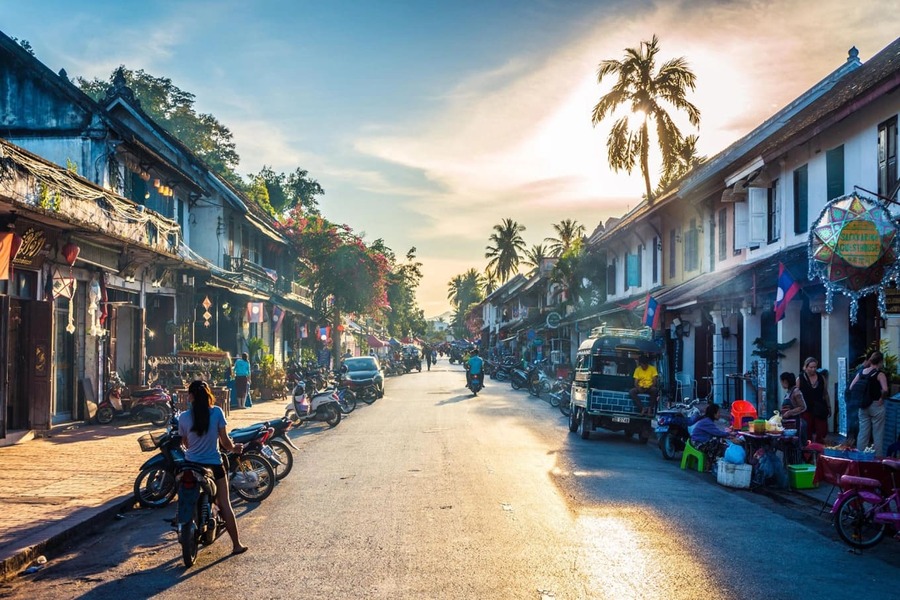
Key reasons it remains a must-visit in 2026 include:
- Over 30 beautifully preserved temples that glow golden at dawn and dusk, many dating back to the 16th century
- One of the most respectful, photogenic, and spiritually meaningful alms-giving ceremonies in Asia
- Easy access to some of Southeast Asia’s most stunning natural attractions: turquoise waterfalls, sacred caves, and lush ethnic villages
- A food scene that marries authentic Laotian flavors (sticky rice, fresh herbs, smoky grills) with French-influenced bakeries, cafes, and croissants
- A slow, meditative pace that encourages travelers to simply be present—something increasingly rare in a fast-paced world
While visitor numbers have grown steadily since the high-speed Laos-China Railway made access easier, the magic endures. Rise early, explore quiet side streets, venture beyond the main tourist path, and you’ll still discover moments of pure stillness and wonder.
Best Time to Visit Luang Prabang & Practical Basics for 2026
The best time to visit Luang Prabang is November–February: cool, dry weather (20–28°C), clear skies, and perfect conditions for early-morning ceremonies and waterfall swims. March–May is hotter (up to 35°C) but significantly quieter, with excellent deals on accommodation. June–October brings rain and lush greenery, lower prices, and fewer crowds, though trails can be slippery and some roads muddy.
Quick essentials for 2026:
- Visa: Visa on arrival or e-visa for most nationalities ($30–50 USD, 30 days); extensions easy in town
- Currency: Lao Kip (LAK); USD widely accepted (carry small $1 and $5 bills); ATMs plentiful
- Getting around: Walk the compact old town; rent bicycles ($2–3/day) or e-bikes; tuk-tuks/songthaews for Kuang Si; private transfers for longer day trips
- Dress code: Cover shoulders and knees at temples; light layers for cool mornings/evenings; modest clothing for monk ceremonies
- Sustainability tip: Choose ethical operators (no elephant riding), support family-run guesthouses and restaurants, and use reusable water bottles—Luang Prabang is making strong progress toward responsible tourism
- Health & safety: Bottled water only; insect repellent for evenings; respect UXO warnings outside marked areas
Top 15 Unmissable Things to Do in Luang Prabang
These experiences create the perfect balance of culture, nature, spirituality, and relaxation.
1. Witness the Morning Alms-Giving Ceremony (Tak Bat)
Every sunrise (around 5:30–6:00 AM), hundreds of saffron-robed monks walk silently through the streets collecting sticky rice and offerings from locals. This daily ritual—known as Tak Bat—is one of the most serene and authentic things to do in Luang Prabang.
Best viewing spots:
- Sakkarine Road (quietest, most respectful)
- Sisavangvong Road (more central, slightly busier)
Insider tips:
- Observe respectfully from a distance—no flash photography, no stepping into the monks’ path
- Dress modestly (shoulders and knees covered)
- Arrive 15–20 minutes early for the best position
- Participating is allowed (buy sticky rice from vendors), but only if done with reverence
2. Explore the Morning Market & Taste Authentic Local Breakfast
After the alms ceremony, stroll to the Luang Prabang Morning Market (near the Royal Palace) for a vibrant display of daily life: fresh produce, herbs, grilled meats, sticky rice packets, and exotic ingredients.
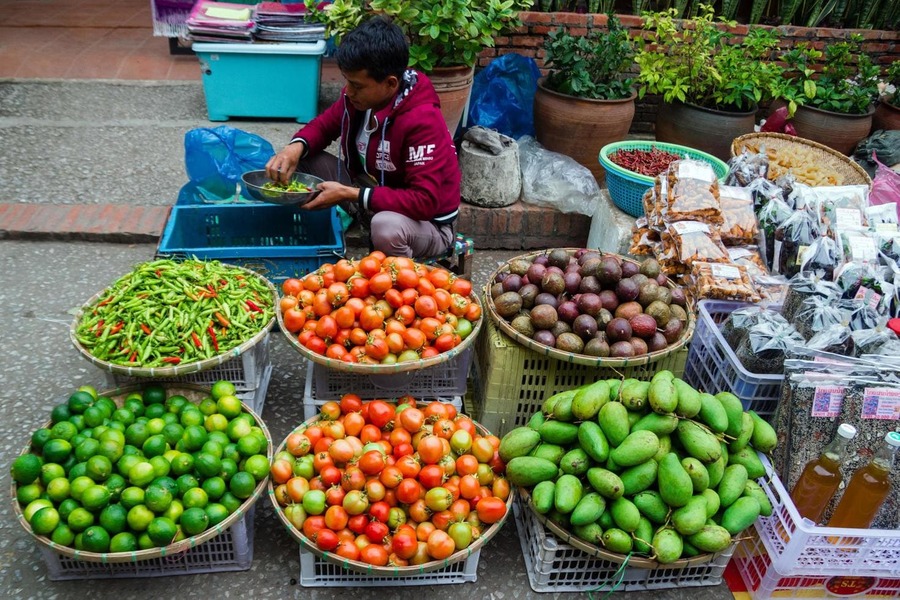
Must-try items:
- Sticky rice with mango or banana
- Fresh baguettes with pâté or Laotian sausage (French colonial legacy)
- Khao nom kok (mini coconut pancakes)
- Fresh fruit smoothies and coconut juice
Pro tip: Visit early (6:30–8:00 AM) for the freshest selection and genuine atmosphere. The market is busiest right after the monks pass.
3. Climb Mount Phousi for Panoramic Sunrise or Sunset Views
The 328-step climb to the summit of Mount Phousi rewards you with sweeping 360-degree views over the Mekong, Nam Khan rivers, golden rooftops, and distant mountains.
Best times:
- Sunrise (arrive 5:30 AM) — magical soft light and almost no crowds
- Sunset (around 5:30–6:00 PM) — golden hour over the rivers
Entry fee: ~20,000 LAK. Combine with a visit to the small temple at the top.
4. Visit Wat Xieng Thong – The Most Beautiful & Significant Temple
This 16th-century royal temple is the most ornate and best-preserved in Luang Prabang, featuring sweeping multi-tiered roofs, intricate mosaics, and a sacred tree.
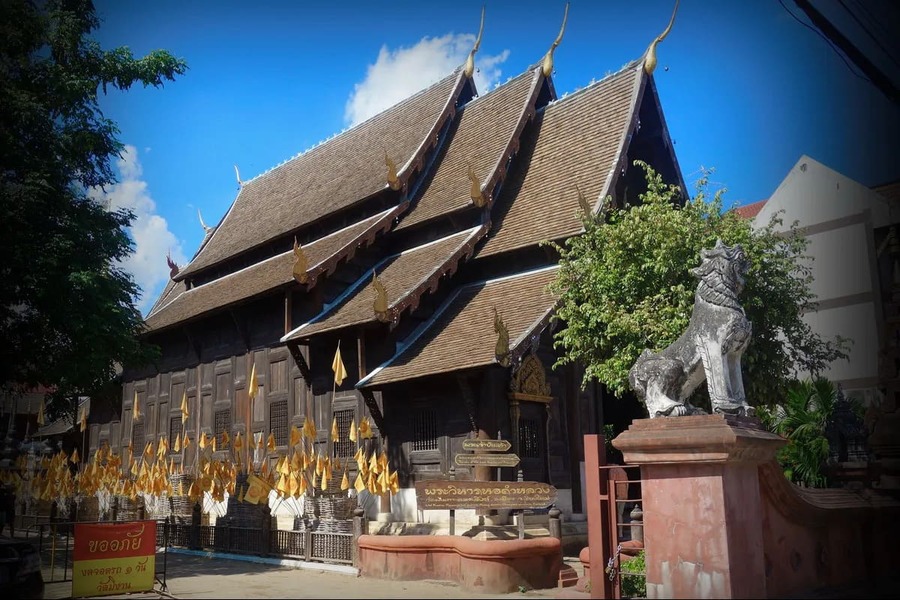
Highlights include:
- The stunning “Tree of Life” mosaic on the rear wall
- Golden funeral chariot used for Lao kings
- Serene courtyard ideal for quiet reflection
Pro tip: Visit early morning for soft natural light and peaceful solitude.
5. Discover Hidden Temples: Wat Pa Phai, Wat Mai & More
Skip the main crowds and explore lesser-known gems:
- Wat Pa Phai — tucked away in a quiet courtyard filled with fragrant bougainvillea and intricate gold details
- Wat Mai — famous for its golden facade and as the former residence of the sacred Pha Bang Buddha
- Wat Sensoukharam and Wat Sop — small, peaceful, and perfect for photography
These quiet spots provide a deeper glimpse into daily monastic life.
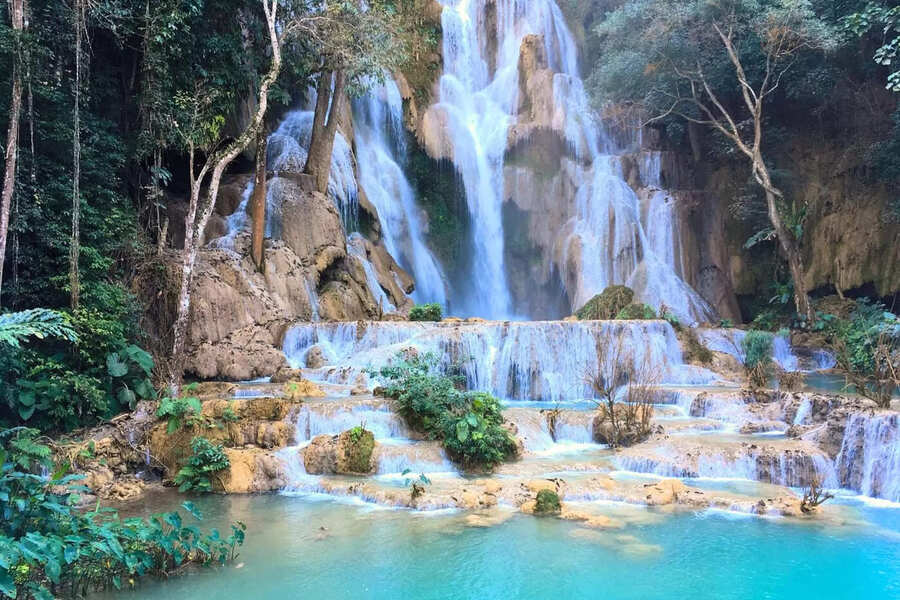
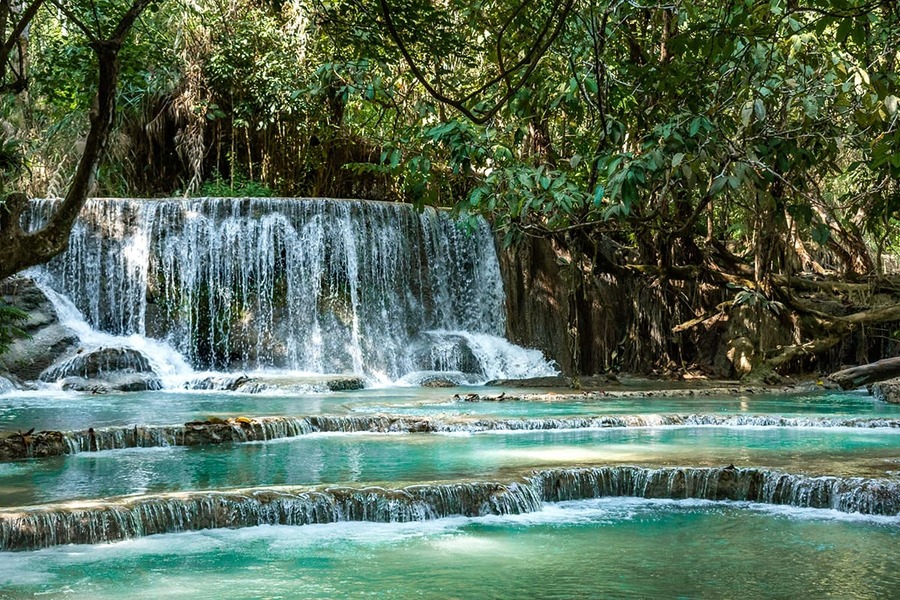
6. Kuang Si Waterfall – Turquoise Pools & Jungle Paradise
Just 45 minutes from town (tuk-tuk, songthaew, or rented scooter), Kuang Si is widely considered one of Southeast Asia’s most stunning waterfalls.
Highlights:
- Multi-tiered turquoise pools perfect for swimming
- Bear Rescue Center (home to dozens of rescued Asiatic black bears)
- Rope swings and natural slides in upper pools
- Easy walking trails with picnic areas and viewpoints
Insider tip: Arrive by 8:00 AM to beat crowds. Bring swimsuit, towel, water shoes, and snacks. Spend 3–5 hours here.
7. Pak Ou Caves – Sacred Buddha Grottoes by Boat
Take a slow boat (2–3 hours round trip) up the Mekong to these two limestone caves filled with over 6,000 Buddha statues placed by devotees over centuries.
Best visited at sunrise or sunset for beautiful light and fewer tourists. Combine with a stop at nearby villages.
8. Cross the Bamboo Bridge & Experience Life Across the Nam Khan
The seasonal bamboo bridge (rebuilt every dry season) crosses the Nam Khan River and offers a unique local experience.
Activities on the other side:
- Relax at riverside cafes with Mekong views
- Join traditional weaving workshops (Katu or Hmong techniques)
- Explore small villages and rice paddies
Small fee (~5,000 LAK) supports annual bridge maintenance.
9. Luang Prabang Night Market – Vibrant Evening Atmosphere
Every evening, Sisavangvong Road transforms into a colorful, lively market.
Highlights:
- Handmade textiles, silver jewelry, and traditional crafts
- Street food: grilled meats, sticky rice, coconut pancakes, fresh fruit
- Beerlao and fresh smoothies
Pro tip: Bargain respectfully and prioritize local artisans.
10. Ethical Elephant Experiences & Mahout Interaction
Choose observation-only sanctuaries (no riding) for ethical encounters with rescued elephants.
Popular options near Kuang Si focus on feeding, bathing, and learning about conservation—highly rewarding and responsible.
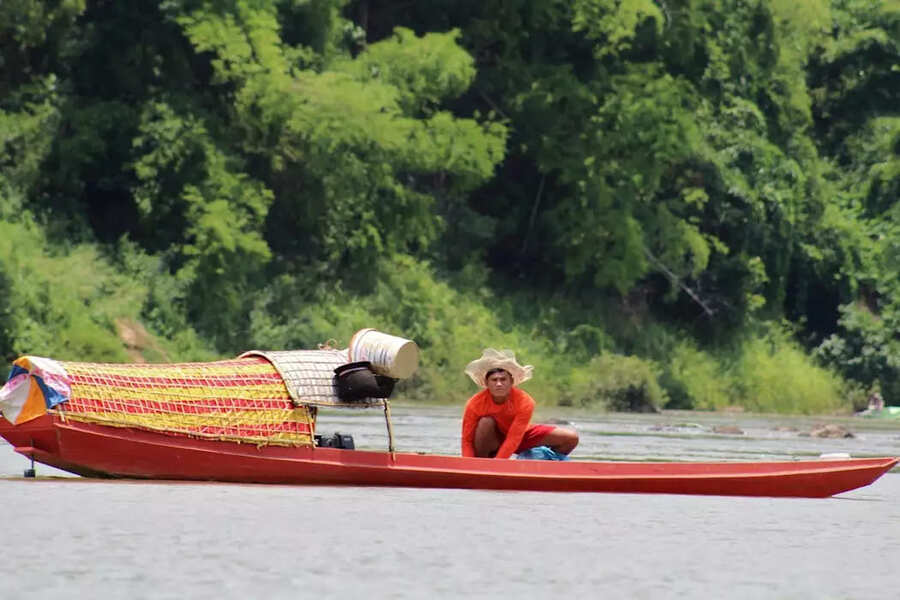
11. Mekong River Sunset Cruise
A slow boat cruise at sunset offers peaceful views of the river, golden temples, distant mountains, and traditional fishing life.
Many cruises include cold drinks and snacks—perfect way to unwind.
12. Cooking Class – Master Authentic Laotian Cuisine
Join a hands-on class to learn staples like laap, sticky rice, tam mak hoong, and or lam.
Most include a morning market visit for fresh ingredients and end with a shared meal you’ve prepared.
13. Traditional Massage & Herbal Sauna
Laotian massages use warm herbal compresses (lemongrass, ginger, kaffir lime) for deep relaxation.
Herbal saunas (often at temples or spas) are perfect after hiking or waterfalls.
14. Morning Alms Offering Participation (Respectfully)
If you wish to participate, buy sticky rice from morning vendors and offer it quietly to the monks.
Dress modestly and follow local guidance—many find this deeply moving.
15. Day Trip to Nearby Ethnic Villages & Rice Terraces
Guided day trips to Hmong or Khmu villages offer cultural immersion, traditional weaving demonstrations, and insights into rural Lao life.
These experiences support local communities and provide a deeper understanding of Laos beyond the town.
Sample 3–7 Day Luang Prabang Itinerary
Day 1: Alms ceremony → Morning Market → Mount Phousi sunrise → Temples (Wat Xieng Thong, Wat Mai) → Sunset cruise
Day 2: Kuang Si Waterfall full day → Night Market & street food
Day 3: Pak Ou Caves boat trip → Bamboo Bridge & weaving workshop → Cooking class
Day 4: Ethical elephant experience → Traditional massage → Explore hidden temples
Day 5–7: Day trip to ethnic villages → Free time for relaxation, cafes, and photography
Final Thoughts: Why Luang Prabang Stays Unforgettable in 2026
Things to do in Luang Prabang create memories that linger long after the trip ends. The town’s quiet mornings filled with monks, golden light on ancient temples, emerald waterfalls, gentle rivers, and unhurried pace offer something increasingly rare: genuine peace, presence, and connection.
In 2026, with improved transport links and a growing focus on sustainable tourism, Luang Prabang remains a place to slow down, reflect, and reconnect with both history and nature. Rise early, walk softly, support local communities, respect sacred spaces, and let the serenity of Luang Prabang work its quiet magic.
Safe travels—and may every sunrise and sunset in Luang Prabang stay with you forever.
0 Comment