
Introduction: Why “Temple Tourism” Is Missing 90% of the Story
Let’s be honest: you can see a temple in a guidebook. You don’t need to fly 7,000 miles and spend two weeks in Southeast Asia just to check off “Angkor Wat” from your bucket list (though it’s objectively stunning, I won’t lie).
The real magic of Vietnam, Laos, and Cambodia isn’t in the architectural monuments-it’s in the intimate moments that most tourists completely miss. It’s the family business owner in Hanoi’s Old Quarter who invites you into their home for lunch because you asked a genuine question about their craft. It’s the river boatman in Laos who teaches you the proper way to offer alms to Buddhist monks at dawn. It’s the elderly Khmer woman in a remote Cambodian village who shows you how to make her family’s secret fish paste recipe, a tradition that’s been passed down for seven generations.
This is cultural immersion-and it’s become one of the most sought-after forms of travel in 2025.
Unlike generic temple tours (which frankly feel like organized sightseeing to an increasingly savvy traveling public), authentic cultural immersion in Southeast Asia offers something rarer and infinitely more valuable: genuine human connection, real understanding, and memories that actually change how you see the world. And here’s the surprising truth: it doesn’t require special permits, expensive packages, or even fluent language skills. It requires a different mindset about travel itself.
According to 2025 travel trends data, cultural immersion trips represent one of the fastest-growing travel segments globally, with travelers increasingly rejecting surface-level tourism in favor of experiences that foster mutual respect and authentic learning. Southeast Asia-specifically Vietnam, Laos, and Cambodia-has emerged as the global epicenter for this type of meaningful travel, offering unparalleled opportunities to engage deeply with living cultures that have evolved over millennia.
In this comprehensive guide, we’ll explore what genuine cultural immersion actually looks like beyond the typical temple tours, reveal the specific experiences and practices that create authentic understanding, and provide you with a practical framework for engineering your own deep cultural experiences during Vietnam vacation packages. Whether you’re a first-time visitor or a returning explorer, this guide will help you move past surface-level sightseeing into genuine cultural engagement that enriches both your understanding and the communities you visit.
Understanding Cultural Immersion (It’s Not What Most Travel Companies Tell You)
Before we dive into specific experiences, let’s clarify what cultural immersion actually means-because the definition matters enormously.
The Illusion: What Most Travel Companies Call “Cultural Immersion”
Most tour operators market “cultural experiences” that look like this:
- Visit a local morning market with a guide (1-2 hours)
- Watch a traditional dance performance (usually scheduled specifically for tourists)
- Eat a “traditional meal” at a touristy restaurant
- Visit a temple or historical site
- Return to air-conditioned hotel to relax
This isn’t cultural immersion. This is cultural tourism. There’s a distinction-and recognizing it is essential if you actually want meaningful experiences.
The problem: These activities are engineered for efficiency, comfort, and camera-friendliness. They maximize the number of “experiences” you can check off, but minimize the depth of actual understanding or connection. It’s like reading a Wikipedia summary of a culture instead of living within it.
The Reality: What Genuine Cultural Immersion Actually Requires
Authentic cultural immersion has several non-negotiable characteristics:
Time: You cannot develop genuine understanding in 2-3 hours. Research from tourism anthropology indicates that meaningful cultural understanding requires minimum 3-5 days of continuous engagement with a single community or practice. This is why rushed multi-country “temple tours” often leave people feeling like they’ve seen a lot but understood little.
Participation, Not Observation: Watching someone perform a traditional practice is not immersion. Attempting to do it yourself-even poorly-creates vastly different learning and connection. This is why cooking classes, craft workshops, and hands-on activities create authentic immersion while pure sightseeing does not.
Local Direction: The best cultural experiences are often those you didn’t plan. When you have flexibility built into your itinerary and genuine relationships with locals who can recommend unscripted experiences, that’s when cultural immersion actually happens. Following a predetermined “authentic experience” itinerary is somewhat contradictory-true authenticity emerges from spontaneous, genuine interaction.
Vulnerability and Language Effort: You don’t need fluent language skills, but you do need willingness to be slightly uncomfortable. Attempting basic phrases, asking genuine questions, and accepting that you’ll sometimes be confused-these moments create real connection. Hiding behind a guide or sticking to English-speaking bubble tours significantly reduces immersion quality.
Mutual Benefit and Respect: Authentic cultural immersion means understanding and respecting local contexts. It means knowing that participating in a ceremony requires genuine reverence, not just photography. It means supporting local economies fairly rather than seeking the cheapest version of an experience. Communities can feel (and resent) exploitative tourism-and they respect genuine respect.
Vietnam: Beyond Temples to Living Culture
Vietnam, with its 1,650-kilometer coastline and deeply layered history, offers some of the world’s richest opportunities for cultural immersion specifically because so much of Vietnamese culture is embedded in everyday life rather than preserved in monuments.
Hanoi: The Authentic Vietnam Most Tourists Miss
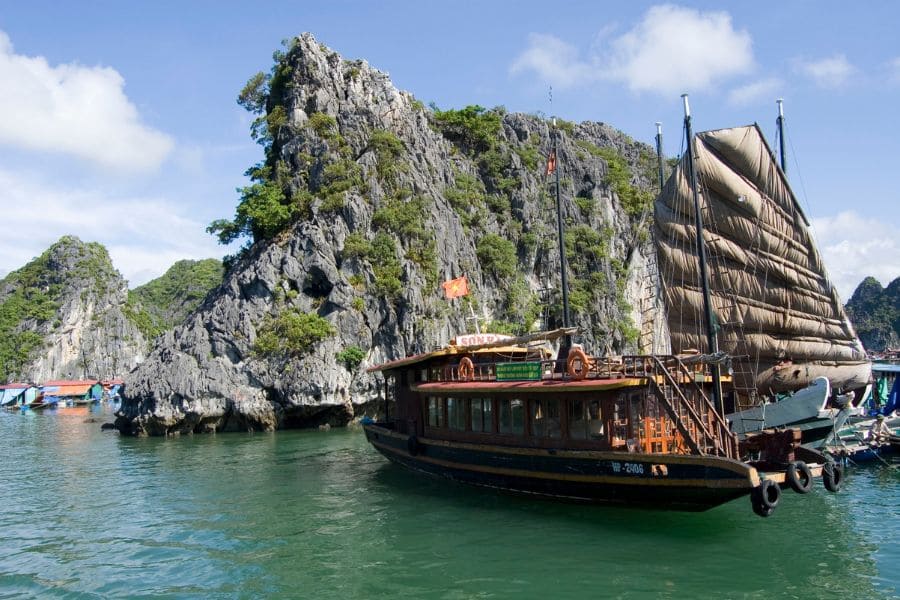
Hanoi gets a reputation for being “chaotic” and “touristy,” but this misses the point entirely. The chaos is the culture. The city represents the living intersection of ancient traditions and modern Vietnamese identity-and understanding this intersection is profoundly enriching.
Old Quarter Immersion (Beyond “Nice Streets to Photo”)
The Hanoi Old Quarter isn’t a museum-it’s a functioning neighborhood where families live and work above shops that have operated for centuries. Real immersion here looks like this:
Rather than walking through for photos, book a 3-4 hour “heritage craft walk” with a local guide (not a generic tour operator guide). The best guides are those who actually grew up in the Old Quarter or have deep family connections there. They can introduce you to artisans in their actual workshops-the silver worker whose family has been crafting jewelry the same way since 1890, or the pharmacist who still hand-prepares traditional Vietnamese medicine using methods refined over generations.
Even better: participate. Ask to try shaping silver, or observe how traditional medicines are ground and mixed. Ask questions about how they decide whether to modernize or maintain traditional methods. These conversations, which emerge naturally from genuine interest, create authentic cultural understanding.
Street Food as Cultural Archaeology
Vietnamese food tells the story of the culture-the invasions it’s absorbed, the regions that influenced it, the agricultural reality of the land. Each dish exists for reasons rooted in geography, history, and necessity.
Rather than joining a generic “street food tour,” arrange with a local guide or family to visit specific stalls where they personally eat breakfast. In Vietnam, breakfast isn’t a quick affair-it’s a social ritual. Sit down, order what they order, and ask why. The woman selling phở at 6 AM has perfected a broth that’s been simmering overnight, and she can tell you about the different regional phở styles, which reflect Vietnam’s north-south diversity.
What makes this immersive: you’re not consuming food as a tourist experience, you’re participating in an actual Vietnamese daily ritual. The difference in how you experience it is night-and-day different.
Central Vietnam: Heritage, Craft, and Genuine Slowness
The central coast-Hoi An, Da Nang, Hue-offers the most accessible entry point for deep cultural immersion because the pace naturally slows down. Fewer tourists venture beyond the famous sites, and the infrastructure supports longer stays more naturally.
Hoi An Craft Workshops and Artisan Communities
Hoi An’s ancient town is (justifiably) famous, but its real value lies in the living craft traditions that sustain the area. Unlike mass-market tourist workshops, seek out family-run operations that still use traditional methods:
- Lantern making: The iconic silk lanterns aren’t just souvenirs-they represent a craft tradition that emerged because Hoi An was a major Southeast Asian trade port where Chinese, Japanese, and Indian influences merged. Working with a lantern-maker for 2-3 hours, understanding the symbolism of different designs and learning to shape bamboo and silk, creates genuine understanding of how art and commerce intersected in this historic place.
- Tailor workshops: Hoi An is famous for tailoring, but most tourist tailors produce generic clothing quickly. The authentic experience: work with a tailor who specializes in reconstructing traditional Vietnamese áo dài (traditional dress) or who’s trained in heritage techniques. Ask about the historical significance of garment construction, why certain stitching methods matter, and how tailoring traditions changed during different historical periods.
- Pottery workshops: The nearby Thanh Ha pottery village has operated for 500+ years using unchanged techniques. Rather than a quick pottery class, spend a morning with a potter in their actual workspace. Understand how clay sourcing, kiln construction, and firing techniques have evolved (or deliberately not evolved) to maintain quality.
Rural Immersion Beyond “Countryside Tours”
The most authentic cultural experiences in central Vietnam happen in rural areas-but only if you approach them correctly.
Rather than joining an organized “rural village tour,” work with local guides to arrange extended time (3-5 hours minimum) in a specific community. The difference matters: tourists arriving in a guided group feel like an event. An individual or small group (2-3 people) feels like a genuine visit.
What to do:
- Help with actual agricultural work if permitted (rice planting, vegetable harvesting-physical work creates connection and understanding)
- Eat a meal prepared by family members in their home, not a restaurant
- Ask about how life has changed in their lifetime-education options, economic opportunities, whether younger generations want to stay in farming
- Visit the local school or market on a non-tourist-oriented day
These experiences reveal how Vietnamese rural culture is rapidly evolving, which is infinitely more interesting than a static, preserved “traditional village” performance.
Northern Vietnam: Ethnic Diversity and Mountain Culture
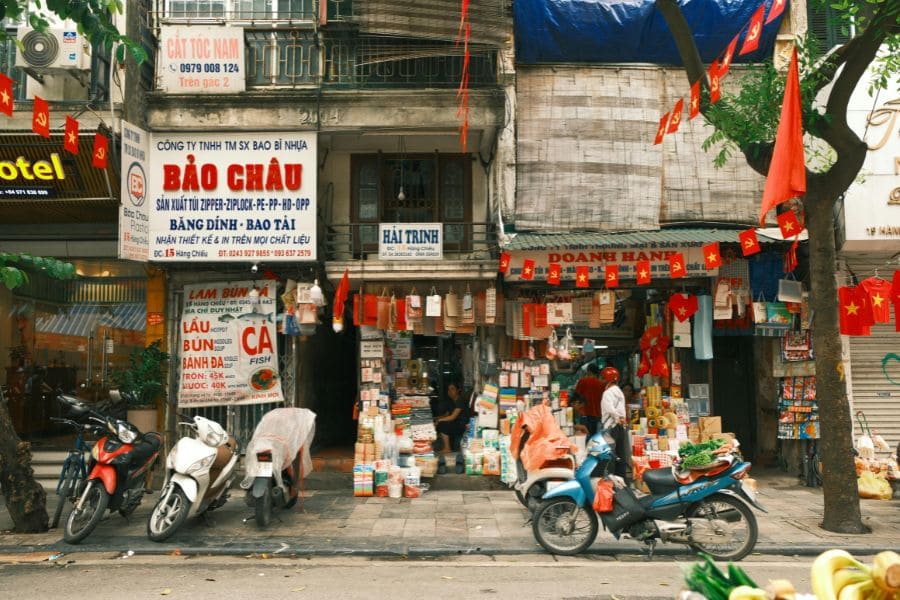
Northern Vietnam’s mountain regions are home to dozens of ethnic minorities (H’mong, Dao, Tay, Nung, and others), each with distinct languages, customs, festivals, and agricultural practices.
The challenge and opportunity: these communities are increasingly accessible to tourists, but accessibility has created both positive economic opportunities and negative impacts (staged performances, cultural erosion, pressure on traditional practices).
Genuine Minority Cultural Engagement
Rather than standard “trek to minority villages” tourism, seek out homestay experiences that are structured around extended engagement:
- Multi-day homestays with language focus: Some families and operators have created genuine exchange programs where you stay 3-5 days with a family, participate in daily activities, and have structured language lessons. These aren’t cultural performance for tourists-they’re actual family life where your participation helps with genuine labor.
- Festival participation: If you can time your travel, attending ethnic minority festivals (which happen on various dates throughout the year depending on the community) is profoundly different from visiting the same village on a random Tuesday. Festivals aren’t tourist events-they’re community celebrations where your respectful participation is welcomed.
- Craft skill-building: Each ethnic group maintains distinct textile traditions. Rather than buying mass-produced “traditional” scarves, learn directly from women who weave using traditional methods. A 2-3 day textile workshop in a mountain community creates understanding of techniques, symbolism, and the economics of maintaining these practices.
Laos: The Spiritual Foundation of Indochina Culture
Laos, the only landlocked Southeast Asian nation, is often overlooked in favor of Vietnam and Cambodia. This is a missed opportunity-because Laos offers perhaps the most accessible entry point for deep cultural immersion, specifically because it has resisted rapid modernization and maintains stronger continuity with traditional practices.
Luang Prabang: Living Buddhist Culture
Luang Prabang, Laos’s cultural capital, is a UNESCO World Heritage site-but not in the “preserved museum” sense. It’s living cultural heritage where spiritual practices remain central to daily life.
Alms-Giving as Cultural Immersion (Not Tourist Performance)
In Luang Prabang, Buddhist monks perform a daily alms-round (called takbat) beginning at dawn. Thousands of tourists now participate in this ritual, which has created authentic cultural tensions: is this spiritual practice or tourist activity?
Genuine immersion requires understanding the context:
Takbat isn’t entertainment-it’s a sacred daily practice where communities offer food and merit to monks who’ve renounced material possessions. Participating respectfully means:
- Waking up before dawn (not easy, but commitment matters)
- Wearing appropriate clothing (cover shoulders and knees, women cannot touch monks)
- Following the silence and meditation that frames the practice
- Understanding that you’re witnessing a spiritual exchange, not a scenic moment
- Supporting ethical operators-homestays whose proceeds support local communities rather than profit extraction
When done with genuine respect and understanding of context, participating in takbat creates profound cultural learning about Buddhist practice, the relationship between communities and spirituality, and how traditional practices persist in modern contexts.
Beyond Takbat: Deeper Laotian Spiritual Practices
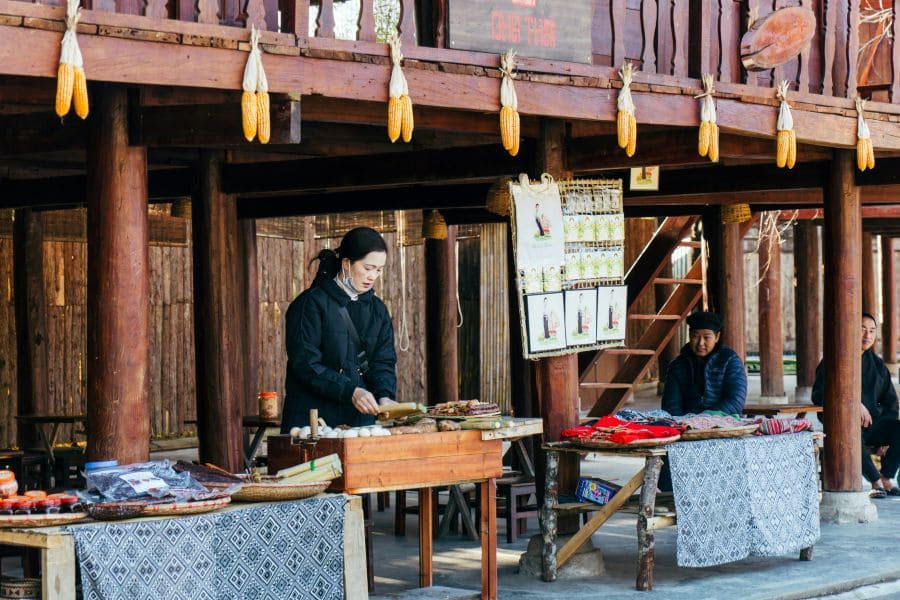
The broader context of Lao Buddhism incorporates spirit worship (animism) alongside Buddhist practice-a syncretism that’s central to Laotian culture but often misunderstood or exoticized by outsiders.
Real immersion means learning about how communities navigate both Buddhist and spirit traditions, when and how ceremonies occur, and what these practices mean psychologically and socially. This requires:
- Extended time with monks or teachers willing to explain practices
- Respectful questioning about beliefs (and acceptance that some aspects aren’t explained to outsiders)
- Observing actual ceremonies, not performances created for tourists
Textile Traditions and Ethnic Crafts
Luang Prabang is surrounded by communities maintaining distinct textile traditions. Lao silk weaving, in particular, represents a craft that nearly disappeared during the war but is being revived-and understanding this history is part of cultural immersion.
Seek out weaving communities (not tourist craft markets) where you can:
- Learn the history of Lao silk and why it almost vanished
- Understand the economic pressures on traditional crafts
- Actually work with weavers to create a small piece
- Discuss how younger generations view textile traditions (spoiler: opinions vary significantly)
Beyond Luang Prabang: Rural and Remote Laos
The most authentic cultural immersion in Laos happens outside the main tourist centers. The Mekong River region, northern mountains, and southern plateaus offer deep cultural engagement-if you have time and flexibility.
Mekong River Communities and Slow Travel
Rather than rushing through Laos on a standard itinerary, consider spending 5-7 days in Mekong River communities. These aren’t “attractions”-they’re actual towns and villages along the river where daily life unfolds.
Genuine immersion:
- Stay in locally-run guesthouses where you interact with owners
- Take local boats rather than tourist speedboats (slower, but you share space with actual river communities)
- Visit local markets on regular days (not tourist-oriented ones)
- Ask about how the river shapes daily life, livelihoods, and culture
- Participate in local evening activities (which might be sitting and drinking Lao whiskey with locals, or helping with household tasks)
Ethnic Diversity in Northern Laos
Like Vietnam, northern Laos has significant ethnic minority populations with distinct cultures. However, tourism infrastructure is less developed, which means your impact is greater-requiring more cultural sensitivity.
Approach minority communities with:
- Longer time commitments (3-5 days minimum)
- Genuine interest in their specific cultural practices, not generic “tribal experience”
- Willingness to participate in actual work rather than choreographed performances
- Fair economic exchange (not seeking poverty-tourism prices)
Cambodia: Beyond Angkor Wat to Living Heritage
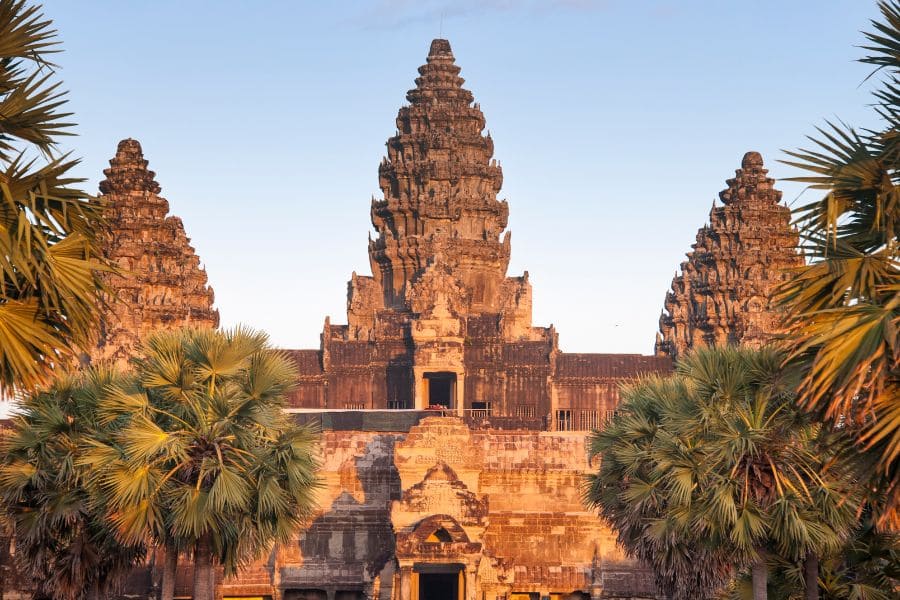
Angkor Wat is one of Earth’s greatest architectural achievements-and one of the most overwhelming tourist sites, which paradoxically makes it an excellent starting point for understanding why authentic cultural immersion requires moving beyond famous sites.
Siem Reap: Beyond the Temples
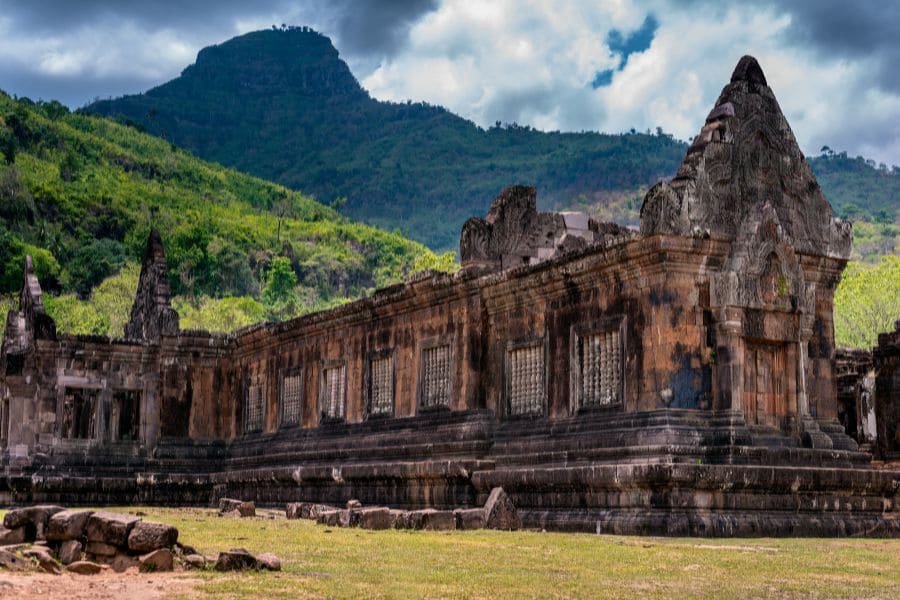
Yes, Angkor Wat is incredible. Visit it. But then venture beyond.
Tonle Sap Lake and Floating Communities
The Tonle Sap Lake, Southeast Asia’s largest freshwater lake, supports floating communities of Cham Muslims and Vietnamese minorities-people whose entire lives unfold on water.
Tourist “boat tours” to floating villages have (fairly) been criticized for functioning as human zoos. Authentic immersion requires:
- Working with ethical operators who have genuine relationships with communities
- Spending extended time (4+ hours minimum), not quick photo stops
- Understanding the historical context (these communities are there due to historical discrimination, not choice)
- Engaging respectfully without photography that exploits residents
- Supporting community-based tourism initiatives rather than profit-extraction operators
When done ethically, spending time in floating communities creates understanding of adaptation, resilience, and how cultures persist despite marginalization.
Artisan Communities and Traditional Crafts
Cambodia’s artisan traditions-woodcarving, stone carving, silk weaving, pottery-nearly disappeared during the Khmer Rouge period. Understanding this history is central to cultural immersion.
Seek out:
- Artisan Angkor: A social enterprise supporting traditional craft training. Working with students and master craftspeople reveals how communities are deliberately reviving cultural practices that were nearly lost.
- Silk Island: A traditional silk-weaving community where you can learn techniques while supporting economic development.
- Stone carving communities: Near Siem Reap, traditional stone carvers continue practices used to create Angkor’s temples, now applied to contemporary work.
Immersion means understanding both the technical skill and the historical/cultural significance of maintaining these practices.
Phnom Penh: History, Trauma, and Resilience
Phnom Penh offers perhaps the most emotionally complex cultural immersion in Indochina-because understanding Cambodia requires confronting the Khmer Rouge era (1975-1979) and how communities have rebuilt and healed.
Genuine Holocaust/Trauma Education
Museums like the Tuol Sleng Genocide Museum and Killing Fields are emotionally intense and historically essential. But “cultural immersion” here doesn’t mean checking them off-it means:
- Taking time to genuinely absorb the historical reality (not rushing through)
- Seeking educational resources beyond the sites themselves
- Engaging with survivors’ stories (if you find ethical guides or books)
- Understanding how this history shapes contemporary Cambodian identity and trauma recovery
Contemporary Culture and Resilience
Beyond the dark history, understanding contemporary Cambodia means engaging with:
- Modern Cambodian arts and creative communities
- Local markets and daily life
- Young Cambodians’ perspectives on their country’s future
- How traditional practices are being revived and transformed
Practical Strategies for Authentic Cultural Immersion
Now that we’ve explored specific regions, here’s how to actually engineer genuine cultural immersion:
Strategy 1: Extend Your Time
The most important variable: stay longer in fewer places. A 14-day trip visiting 5 countries will deliver surface-level experiences. A 14-day trip spending 4-5 days in each of 3 regions will deliver genuine understanding.
Minimum time for authentic cultural immersion in a single community: 3-5 days. This allows you to move past the “tourist performance” phase into actual relationship-building and spontaneous experiences.
Strategy 2: Work with Ethical Local Operators
The difference between surface tourism and genuine immersion often comes down to who facilitates your experiences. Seek operators who:
- Are from the communities they operate in (not external companies parachuting guides in)
- Have long-term relationships with local families and artisans
- Prioritize education and genuine exchange over maximizing tourism volume
- Can articulate how their business benefits communities beyond superficial employment
Strategy 3: Build Flexibility Into Your Itinerary
The best cultural experiences often emerge spontaneously. If your itinerary is locked into predetermined activities, you’ll miss these moments. Build in:
- Unscheduled time (30-40% of your trip)
- Ability to extend in places that resonate with you
- Flexibility to follow recommendations from guides or other travelers
- Openness to experiences that weren’t in your original plan
Strategy 4: Learn Basic Language
You don’t need fluency, but learning 10-15 common phrases in Vietnamese, Lao, or Khmer has disproportionate impact. It signals respect, creates connection, and often results in much warmer receptions. Locals appreciate genuine effort more than perfect execution.
Strategy 5: Prioritize Participation Over Observation
Choose experiences where you participate (cooking classes, craft workshops, agricultural work) over pure sightseeing. The difference in learning and connection is dramatic.
Strategy 6: Engage with Multiple Perspectives
Don’t just listen to your guide. Talk to other locals-taxi drivers, hotel staff, shop owners, families. Different people will have different perspectives on culture, change, and what matters most.
The 2026 Reality: Cultural Change and Ethical Immersion
Important context: Vietnam, Laos, and Cambodia are rapidly modernizing. Younger generations have different values and aspirations than their parents. Traditional practices are evolving-which is natural and normal.
Authentic cultural immersion means understanding this change, not romanticizing a static, “traditional” version of culture that no longer (or never truly) exists. It means:
- Respecting that modernization is chosen by communities, not imposed by outsiders
- Understanding that traditional practices have value but also real constraints
- Recognizing that communities aren’t museums-they’re living, evolving societies
- Engaging with diverse perspectives rather than seeking a single “authentic” culture
Common Mistakes (And How to Avoid Them)
Mistake 1: Seeking “authentic” experiences while avoiding discomfort
Genuine cultural immersion is sometimes uncomfortable-bad toilets, language barriers, unfamiliar food, slower pace. Avoiding these discomforts means avoiding authentic immersion.
Mistake 2: Treating cultural immersion as tourism consumption
The mindset matters. If you approach cultural engagement as something to consume and photograph, you’ll have a different experience than if you approach it as genuine learning and exchange.
Mistake 3: Rushing through communities
More destinations doesn’t equal richer experience. Depth creates understanding; breadth creates a collection of photos.
Mistake 4: Ignoring the economics of tourism
Supporting communities means paying fair prices, using local services, and understanding that “authentic” experiences require fair compensation.
Mistake 5: Assuming English-speaking guides = better guides
Some of the best cultural guides speak English imperfectly but have deep community knowledge. Don’t dismiss them for language reasons.
Conclusion: Cultural Immersion as Meaningful Travel
The journey beyond temples isn’t actually a journey away from culture-it’s a journey toward understanding that culture isn’t confined to monuments and performances. It’s embedded in daily practices, family relationships, economic decisions, spiritual beliefs, and how communities navigate change.
Southeast Asia in 2025 offers unprecedented access to these deeper cultural engagements. But access requires a different approach to travel-one prioritizing depth over breadth, genuine exchange over consumption, and respect over exploitation.
The most meaningful Vietnam vacation, or experience across Cambodia and Laos, isn’t the one where you’ve seen the most sites. It’s the one where you’ve genuinely connected with people, understood their perspectives, and recognized your own assumptions about culture, change, and tradition.
That’s the journey worth taking.
Ready for Authentic Cultural Immersion?
Whether you’re seeking deeper Vietnam experiences, Laotian spiritual engagement, or Cambodian cultural understanding, working with operators who specialize in authentic, ethical immersion makes the difference. We design Vietnam vacation itineraries and multi-country experiences around genuine cultural engagement – not tourist performance.
Your most meaningful travel memories are waiting in the moments between famous sites, in conversations with people who welcome your genuine interest, and in experiences that change how you understand the world.
Let’s make them happen.
0 Comment