
Introduction: Why the Real Indochina Lies Off the Tourist Maps
Here’s the honest truth about Indochina tourism: most travelers follow the same predictable route. Hanoi → Halong Bay → Ho Chi Minh City → Siem Reap. It’s like following a GPS voice that only knows three destinations. And while those places are genuinely incredible, they’re also saturated with tourists, overpriced, and increasingly commercialized.
Meanwhile, mere hours away from these famous sites, there are places that deliver experiences that the guidebooks don’t capture. Places where tourism infrastructure exists but hasn’t been fully “optimized.” Places where you can still have genuine interactions without feeling like you’re part of a scripted encounter.
The gap between famous and hidden can be surprisingly small. While everyone queues for 2 hours to see Angkor Wat’s sunset, 30 kilometers away in Banteay Srei, you might share a temple complex with five other people. While tourists cram into Halong Bay boat tours, the structurally identical Lan Ha Bay offers the same karst beauty with 1/10th the crowds. While Ho Chi Minh City’s backpacker district throbs with organized chaos, quieter cities offer authentic local culture, better food, and genuine warmth.
What makes these off-the-beaten-path destinations genuinely worthwhile isn’t just that they’re less crowded (though that’s part of it). It’s that they offer something authentic that has become increasingly rare in mainstream tourism: places where culture hasn’t been packaged for foreign consumption, where local economies still benefit genuinely from visitors, and where you can experience Indochina as travelers did 10-15 years ago.
According to 2026 travel trend data, “hidden gem” travel is growing faster than traditional tourism, with travelers specifically seeking lesser-known destinations that deliver authentic experiences. The emerging insight: you don’t need to sacrifice infrastructure, safety, or accessibility to find genuine cultural experiences-you just need to look beyond the main tourist routes. For those seeking meaningful engagement with Vietnam, Laos, and Cambodia through well-designed Vietnam vacation packages that prioritize authentic cultural encounters, these hidden destinations offer precisely what you’re actually looking for.
This comprehensive guide walks you through Indochina’s best-kept secrets-destinations that remain accessible (good transportation, decent accommodation, local infrastructure), but haven’t been consumed by mass tourism. These aren’t extreme backpacker sacrifices or controversial cultural experiences. They’re simply places where you can still find that authentic, meaningful travel that inspired you to visit Indochina in the first place.
Vietnam’s Hidden Gems: Beyond the Tourist Corridor
Vietnam’s main tourist route (Hanoi → Halong → Ho Chi Minh City → Mekong) deserves its popularity-but it’s become a tourist industrial complex. Here’s what you should actually explore instead:
Northern Vietnam: Ha Giang and Lao Cai Beyond Sapa
The Famous Route: Hanoi → Sapa (famous trekking, heavily touristy, expensive homestays, organized tours everywhere)
The Hidden Reality: Lao Cai Province is vastly larger than Sapa. The real adventure lies outside Sapa’s commercialized core.
Why this matters: Sapa gets 2+ million visitors annually. The surrounding Lao Cai region gets perhaps 5% of that volume. Yet the landscape, culture, and trekking opportunities are nearly identical-sometimes superior.
Specific hidden destinations:
Ha Giang Province: Vietnam’s northernmost and most mountainous region. It’s borderline extreme-you’ll see dramatic Karst mountains, encounter minority ethnic groups (Hmong, Tay, Dao), navigate roads that were recently upgraded, and spend nights in small town guesthouses rather than tourist resorts.
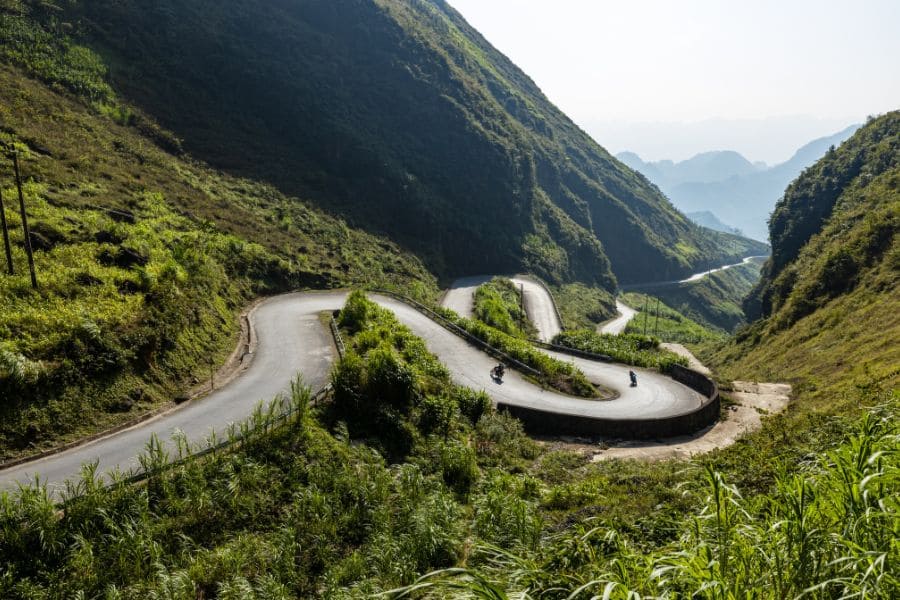
Why go: The landscape is objectively more stunning than Sapa. Roads are well-maintained now (recently upgraded). Communities are genuinely welcoming to travelers. Food is incredible-highland cuisine combines Vietnamese, Chinese, and local minority traditions in ways you won’t find elsewhere.
Infrastructure reality: Guesthouses exist (basic but clean, $15-25/night). Restaurants serve local food (way cheaper than Sapa). Transportation is available (buses, private vehicles). You’ll need a guide for full appreciation (highly recommended-$30-50/day), but the experience is infinitely more authentic than Sapa’s manufactured trekking tours.
Best season: September-November (spring is crowded with Sapa tourists who venture to Ha Giang; fall has stunning golden colors and fewer visitors).
Lao Cai Beyond Sapa: The valleys surrounding Sapa-Cat Cat, Ta Phin, Ta Van, Y Ty-offer authentic minority villages without the tourism circus.
Why go: You can base yourself in a valley village, trek to waterfalls, interact with Hmong and Dao communities outside tourism contexts, eat family meals in homestays (not tourism homestays), and experience mountain life at genuinely local pace.
Real difference: Most “Sapa homestay experiences” involve 20+ tourists rotating through nightly. Valley homestays involve 3-5 guests maximum, actual family dynamics, and genuine exchange.
Central Vietnam: The Coastal “Gaps”
The Famous Route: Hanoi → Hue → Hoi An → Da Nang → Ho Chi Minh City
What tourists miss: The coastal regions between these cities contain some of Vietnam’s most stunning and least-visited beaches, historical sites, and fishing communities.
Specific hidden destinations:
Hue to Hoi An (The Hai Van Pass Region): Most tourists either fly over this region or rush through it. The Hai Van Pass area itself is stunning, but the real hidden gem is Phong Nha-Ke Bang National Park near Dong Hoi.
Why go: Spectacular karst landscape (like Halong Bay but inland), Son Doong Cave (world’s largest cave, mind-blowing), and the town of Phong Nha remains a backpacker hub but nothing like Hanoi/Ho Chi Minh City volume.
The cave experience: Son Doong requires a 5-day trek (intense but incredible). If you can’t commit, Phong Nha Cave offers similar geological wonder in a day trip. Paradise Cave is another option.
Infrastructure: Phong Nha town has evolved into a solid backpacker destination with decent hotels, restaurants, and tour operators. It’s the sweet spot-enough infrastructure that you’re comfortable, few enough tourists that it feels authentic.
Hoi An’s Overlooked Surroundings: Everyone visits Hoi An’s ancient town (now a UNESCO World Heritage tourist site). Nobody explores the rural areas immediately surrounding it.
Why go: 15 kilometers outside the touristy ancient town, you’ll find rice paddies, working fishing communities, artisan villages, and centuries-old temples that exist for locals, not tourists.
The real Hoi An experience: Hire a motorbike ($5-10/day), explore rural areas, stumble upon village pagodas, watch water puppetry in agricultural settings (not the commercialized theater in town), eat at local family restaurants.
Da Nang’s Beach Escape: Da Nang city is increasingly touristic, but the beaches north and south of the city remain relatively undiscovered.
Why go: White sand beaches, no crowds, fresh seafood at beachfront restaurants, incredible sunsets.
Specific spots: My Khe Beach (accessible, beautiful), Son Tra Peninsula (less developed, pristine), Hoi An beaches (less crowded than the ancient town).
Southern Vietnam: The Mekong Beyond the Tourist Circuit
The Famous Route: Ho Chi Minh City → Can Tho → Mekong Delta → Ben Tre (organized “floating village” tours, crowded boats, tourist pricing)
The Hidden Reality: The Mekong Delta is genuinely immense. Tourist routes hit the same 3-4 spots. The actual Mekong life unfolds everywhere else.
Specific hidden destinations:
Tra Su Cajuput Forest (An Giang Province): Near the Cambodian border, this is one of Southeast Asia’s most pristine wetland ecosystems. It’s accessible via the town of Chau Doc (itself a hidden gem-border town with incredible Chinese, Cham Muslim, and Vietnamese fusion culture).
Why go: Stunning landscape (thousands of cajuput trees reflected in water), incredible birdwatching, completely off the tourist radar while still having basic infrastructure.
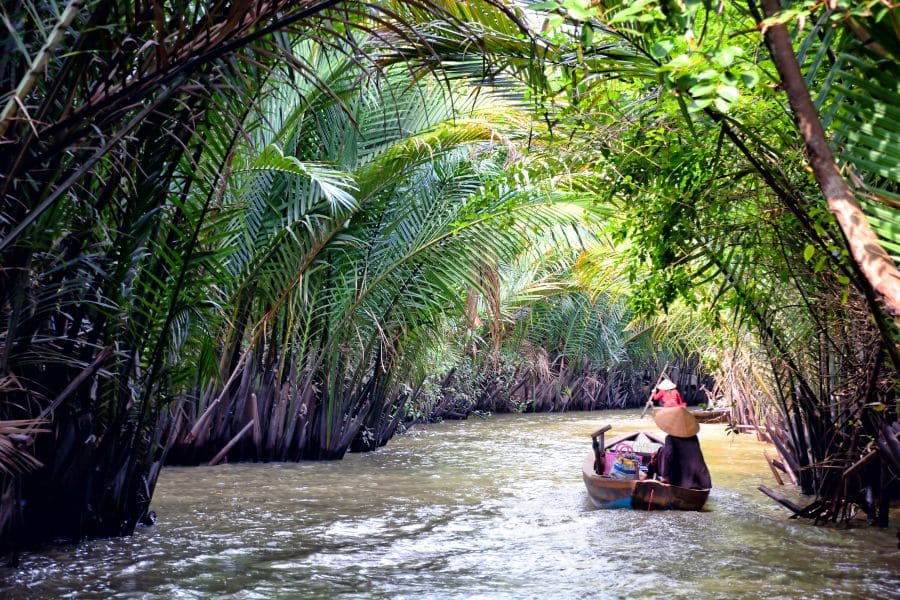
The experience: Early morning row through the flooded forest (serene, spectacular), breakfast at a floating fishing village, explore Chau Doc’s religious syncretism (mosques, temples, churches clustered together), eat at floating fish farms converted to restaurants.
Why it matters: The Mekong Delta’s true beauty lies in its agricultural systems and ethnic diversity. Tourist “Mekong tours” show you floating villages as human zoos. This route shows you actual livelihoods.
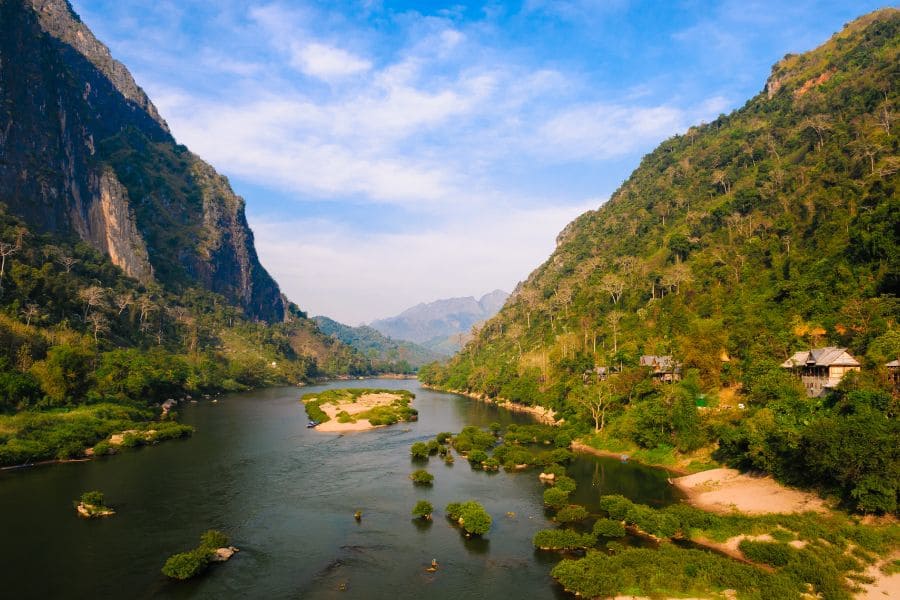
Vinh Long and Ben Tre (Off the Tourist Trail): These towns are 90 minutes from Ho Chi Minh City but completely unknown to most tourists.
Why go: Genuine Mekong life, island communities, orchards and plantations you can actually visit and participate in, local food that’s incredible.
Infrastructure: Vinh Long especially has excellent mid-range hotels ($30-50/night), local restaurants, and easy access to islands. Ben Tre is slightly less developed but more atmospheric.
Laos’s Hidden Gems: Beyond Luang Prabang’s Sanctum
Laos is already less touristy than Vietnam or Cambodia. But even within Laos, certain places draw the crowds.
Northern Laos: Nong Khiaw and Beyond
The Famous Route: Luang Prabang (UNESCO site, golden temples, tourists everywhere)
The Hidden Reality: Just 2 hours north, Nong Khiaw offers everything Luang Prabang offers (temples, culture, river scenery) with 5% of the tourists.
Specific hidden destinations:
Nong Khiaw: A small town on the Nam Ou River surrounded by dramatic karst mountains.
Why go: Stunning setting, excellent trekking, kayaking, quiet nights, genuine community, excellent restaurants serving Laotian cuisine at local prices.
The vibe: Nong Khiaw feels like what Luang Prabang must have felt 15 years ago-a traveler destination that hasn’t been fully commercialized.
The Nam Ou River Region: Communities along the Nam Ou River (which flows into the Mekong) offer insights into upriver Laotian life.
Why go: Boat travel upriver shows you traditional fishing methods, minority communities, and natural beauty most tourists miss.
The experience: Multi-day river journeys can be arranged through guesthouses (slow boats, stopping at villages, natural immersion).
Central Laos: Vang Vieng Beyond the Party Scene
The Famous Route: Vang Vieng is known for tubing (party scene) and has a reputation for chaos.
The Hidden Reality: Beyond the tubing/party image, Vang Vieng offers some of Southeast Asia’s finest limestone karst scenery, excellent rock climbing, and genuinely welcoming local culture.
Specific hidden experiences:
- Climbing: Climbing gyms and outdoor crags rival Thailand’s famous climbing areas, with fewer climbers
- Kayaking: Through flooded caves and karst scenery (less crowded than Phang Nga Bay in Thailand)
- Hiking: To viewpoints, waterfalls, and traditional villages
- Rock formations: Dramatic natural scenery accessed via hiking, not tourism-industrial activities
Why it matters: Vang Vieng has become polarizing-party central or “overrated tourist trap” depending on who you ask. The reality: the landscape is objectively exceptional, and if you skip the tubing/party scene, you’ll find genuine adventure with better infrastructure than more remote Laotian destinations.
Southern Laos: The Bolaven Plateau
The Famous Route: Most tourists skip southern Laos entirely (rushing from Cambodia to Central Laos)
The Hidden Reality: Southern Laos contains some of the region’s most striking natural features and least-touristed infrastructure.
Specific hidden destinations:
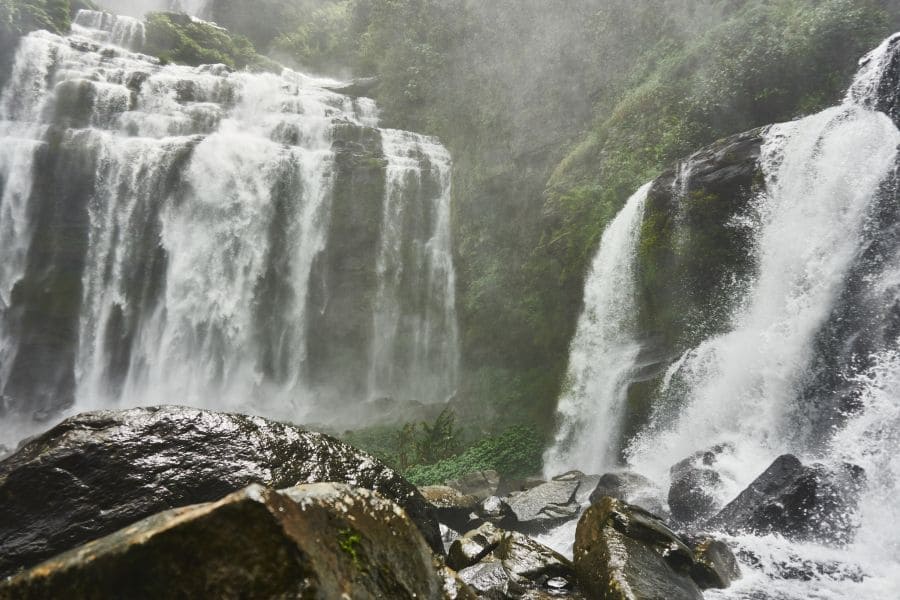
The Bolaven Plateau: A highlands region in southern Laos known for coffee plantations, waterfalls (some of Southeast Asia’s highest), and ethnic minority communities.
Why go: Spectacular scenery (mountains, waterfalls, forests), coffee plantation tourism, moderate tourism infrastructure, deeply authentic culture.
The experience: Stay on a coffee plantation as a working guest, trek to waterfalls, explore minority villages, experience genuinely highland Laotian culture.
Why it matters: The Bolaven Plateau is more accessible than northern Laos’s mountainous regions but radically less touristy than Luang Prabang.
The 4000 Islands (Si Phan Don): Southern Laos’s river delta where the Mekong widens and creates islands.
Why go: Different ecosystem (tropical, watery, fishing communities), extreme relaxation, pristine river environment.
The vibe: Laid-back island communities, boat travel, swimming, cycling through island villages.
Cambodia’s Hidden Gems: Beyond Angkor’s Shadow
Cambodia’s tourism is dominated by Angkor Wat (understandably-it’s one of Earth’s greatest monuments). But this overshadows genuinely excellent lesser-visited destinations.
Siem Reap Region: Beyond Angkor Wat
The Famous Route: Angkor Wat, Angkor Thom, Ta Prohm (all in Siem Reap region, mobbed with tourists)
The Hidden Reality: Siem Reap region has dozens of temples and cultural sites that receive a fraction of Angkor’s visitors.
Specific hidden destinations:
Banteay Srei: 40 kilometers from Siem Reap, this smaller temple complex is architectural masterpiece that rivals Angkor in beauty and intricacy.
Why go: Stunning intricate stone carving, less crowded than Angkor, more personal temple experience.
Reality check: Banteay Srei is technically known (mentioned in guidebooks), but tourist volume is 10% of Angkor. The sunset experience is incomparable.
Beng Mealea: A temple complex 75 kilometers from Siem Reap, deep in the jungle, partially overgrown and unrestored.
Why go: Raw archaeological experience (feels like actual discovery, not processed heritage site), jungle setting, minimal tourists, atmospheric environment.
Why it matters: These temples demonstrate that Cambodia’s architectural heritage extends far beyond Angkor. The craftsmanship, historical significance, and artistic achievement are equivalent. You’re choosing between crowds or experience.
North Cambodia: Battambang and Pailin
The Famous Route: Siem Reap → Phnom Penh (skipping everything in between)
The Hidden Reality: Battambang province (including the city of Battambang) contains stunning colonial architecture, contemporary arts scene, traditional crafts, and genuine Cambodian culture.
Specific hidden destinations:
Battambang City: Cambodia’s second city, featuring well-preserved French colonial architecture, vibrant contemporary arts scene, excellent restaurants, and genuine local culture.
Why go: Beautiful setting, authentic culture, excellent infrastructure (hotels, restaurants, guides), virtually zero tourist crowds outside the immediate city.
The vibe: Genuine Cambodian city experience without the chaos of Phnom Penh or the commercialization of Siem Reap.
Battambang Province’s Outlying Areas: Beyond the city, the province contains:
- Ek Phnom Temple: 13 kilometers away, partially ruined, rarely visited
- Bamboo Train: Original narrow-gauge railway (less touristy if visited from Battambang vs. Siem Reap)
- Pailin: Highland border town, known for gems and natural products, stunning setting
Why it matters: Western Cambodia remains the frontier of Cambodian tourism. Infrastructure exists but hasn’t been packaged for tourists. You’re getting genuine Cambodia.
Coastal Cambodia: Beaches Beyond Sihanoukville
The Famous Route: Siem Reap → Phnom Penh → Sihanoukville (or skip beaches entirely)
The Hidden Reality: Cambodia’s southern coast, while developing, remains radically less developed than Thailand’s beaches and thus more authentic.
Specific hidden destinations:
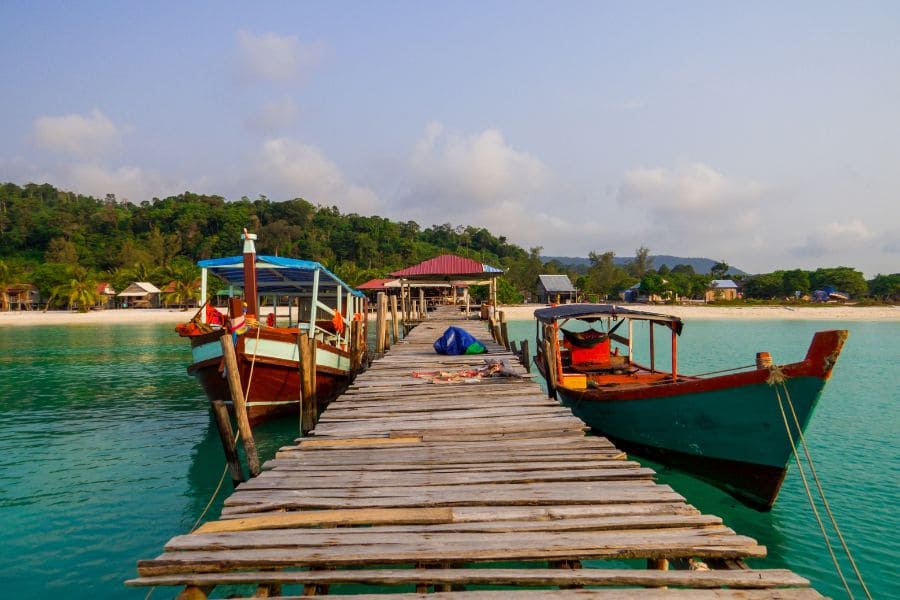
Koh Rong and Koh Rong Sanloem: Islands off the coast offering beaches, diving, snorkeling, and island culture.
Why go: Beautiful beaches, reasonable prices, developing infrastructure (bungalows, restaurants), fewer tourists than Thai islands.
Kampot: A coastal town in Kampot Province, featuring riverside setting, Bokor Mountain (abandoned colonial-era hill station), and pepper plantations.
Why go: French colonial atmosphere, spiritual/meditation sites (Buddhist caves), local food scene, authentic Cambodian coastal town experience.
Why it matters: Cambodia’s beaches and coastal areas are genuinely less developed than equivalent Thai destinations. This means lower prices, more authenticity, and growing but not yet overwhelming infrastructure.
The Framework: How to Actually Find Hidden Gems
Most travelers discover hidden gems by accident or through recommendations. Here’s a framework for finding them intentionally:
Strategy 1: Look Perpendicular to Famous Routes
The famous routes have linear patterns: Hanoi → Halong → Ho Chi Minh City. Hidden gems lie off these lines-places that are close to famous destinations but require deliberate routing to reach.
Example: Phong Nha is only 200 kilometers from Hue but you need to specifically choose to go there. Most tourists fly over this region.
Strategy 2: Seek the “Adjacent Famous” Category
For every famous destination, there’s a geographically similar destination with 10% the crowds.
Examples:
- Halong Bay → Lan Ha/Bai Tu Long
- Luang Prabang → Nong Khiaw
- Angkor Wat → Banteay Srei
- Sihanoukville beaches → Koh Rong islands
These aren’t obscure. They’re just off the main tourist flow.
Strategy 3: Use Local Guides, Not Tourist Information Centers
Tourist information centers push famous sites (they’re easier to organize). Local guides know the actual culture.
Strategy 4: Travel Slower Through Regions
Rushing through Laos: Vientiane → Luang Prabang → Vang Vieng on 4-day trips misses everything. Spending 7-10 days allows for exploration.
Strategy 5: Embrace Motorbike/Cycling Travel
Many hidden gems are inaccessible except by personal vehicle. Motorbike rentals ($5-8/day) unlock exploration impossible on organized tours.
Practical Logistics: How to Actually Get There
Accommodation: Hidden gems have guesthouses (not resorts). Budget $15-40/night. Booking through local guesthouses (not OTA sites) is often necessary.
Transportation: Local buses, minivans, and motorbike rentals connect hidden gems. It requires more planning than following a tour itinerary, but it’s doable.
Guides: Local guides can often be arranged through guesthouses or hired at the destination. Highly recommended for maximizing experience.
Timing: Hidden gems require more flexible itineraries. A 14-day trip with fixed dates works better with famous sites. Hidden gems benefit from flexibility.
The 2026 Hidden Gem Reality
Important context: “hidden gems” that become famous stop being hidden. Places like Dalat, Ninh Binh, and Hoi An are increasingly touristy. But the framework-look adjacent to famous, travel slowly, engage locally-continues to reveal genuine experiences.
The emerging destinations getting tourist attention: Ha Giang, Battambang, Phong Nha. These are heading toward the “known but not mobbed” category, making now the ideal time to visit before they saturate.
Conclusion: The Indochina Worth Discovering
The famous Indochina-Hanoi, Halong, Angkor Wat, Luang Prabang-deserves its reputation. These places are objectively exceptional. But tourism’s momentum creates a self-reinforcing cycle where famous becomes more famous because it’s easier to reach.
The actual cultural richness, natural diversity, and human warmth of Indochina extends everywhere. The hidden gems aren’t secrets because they’re bad; they’re secrets because they require slightly more intention to reach.
Whether you’re exploring Ha Giang’s dramatic mountains, paddling through the Bolaven Plateau’s waterfalls, or discovering Battambang’s French colonial beauty, these off-the-beaten-path destinations deliver what most travelers actually came to Indochina seeking: authentic culture, genuine connection, authentic natural beauty, and meaningful experiences.
The most rewarding Indochina journeys aren’t the ones that check off the most famous sites. They’re the ones that balance iconic experience with authentic discovery-the ones where you see what everyone sees, but also experience what few actually find.
Ready to explore Indochina’s true diversity? Working with tour operators and guides who specialize in balancing iconic experiences with authentic hidden gem discoveries makes the difference between a good trip and a genuinely transformative one. We specialize in designing itineraries that include the must-see highlights while prioritizing the off-the-beaten-path experiences that create lasting memories through thoughtfully crafted Vietnam vacation packages.
Your authentic Indochina adventure awaits-beyond the famous routes, in the places where culture still feels real and travel still feels like discovery.
0 Comment