
Introduction: The Luxury Travel Paradox Nobody Talks About
Here’s the thing that blew my mind when I first started researching luxury travel in Southeast Asia: you can sip cocktails by a private infinity pool overlooking the Mekong Delta, feast on farm-to-table cuisine prepared by award-winning chefs, and explore ancient temples with a personal guide-all while spending less than you would for a weekend getaway in most Western cities.
Sounds too good to be true? It’s not. And that’s exactly why Southeast Asia has become the go-to destination for savvy luxury travelers who refuse to choose between exceptional experiences and sensible budgets. Whether you’re exploring vibrant Vietnam, mystical Cambodia, or serene Laos, the region offers an embarrassment of riches when it comes to premium experiences at surprisingly reasonable prices.
But here’s where it gets tricky: not all “luxury on a budget” claims are created equal. Some tours promise five-star experiences but deliver three-star hotels with inflated price tags. Others cut corners on the experiences that truly matter-cultural authenticity, personalized service, and those Instagram-worthy moments that actually feel meaningful, not manufactured.
That’s why we’ve spent considerable time researching the landscape of luxury travel in Southeast Asia, analyzing market trends, speaking with experienced travelers, and working directly with countless guests who’ve discovered that the region offers some of the world’s best value for premium adventures. In this comprehensive guide, we’ll walk you through exactly how to experience Vietnam vacation packages that deliver genuine luxury without the eye-watering price tag, along with proven strategies for finding authentic premium experiences across the entire region.
Why Southeast Asia Is Becoming the Epicenter of Luxury Travel (And It’s Not Just Cheaper)
Let’s address the elephant in the room first: yes, you can afford luxury travel in Southeast Asia more easily than in Europe or North America. A private villa with a personal chef that would cost $1,000+ per night in Bali’s tourist zones might run you $400-500 in equally stunning but less Instagram-famous locations. But that’s not the real story.
The real story is that Southeast Asia offers something that money can’t easily buy in more developed tourist markets: genuine cultural immersion paired with world-class service.
According to recent 2026 luxury travel trends, Southeast Asia’s appeal lies not in discount pricing, but in the convergence of several factors that make the region objectively superior for certain types of luxury travel:
Cultural Richness Meets Modern Comfort: Unlike many mature luxury destinations where infrastructure has homogenized the experience, Southeast Asia still maintains distinct cultural identities while rapidly upgrading hospitality standards. You can meditate in a Buddhist temple in the morning and enjoy a spa treatment from a world-class wellness resort in the evening-without compromise on either experience.
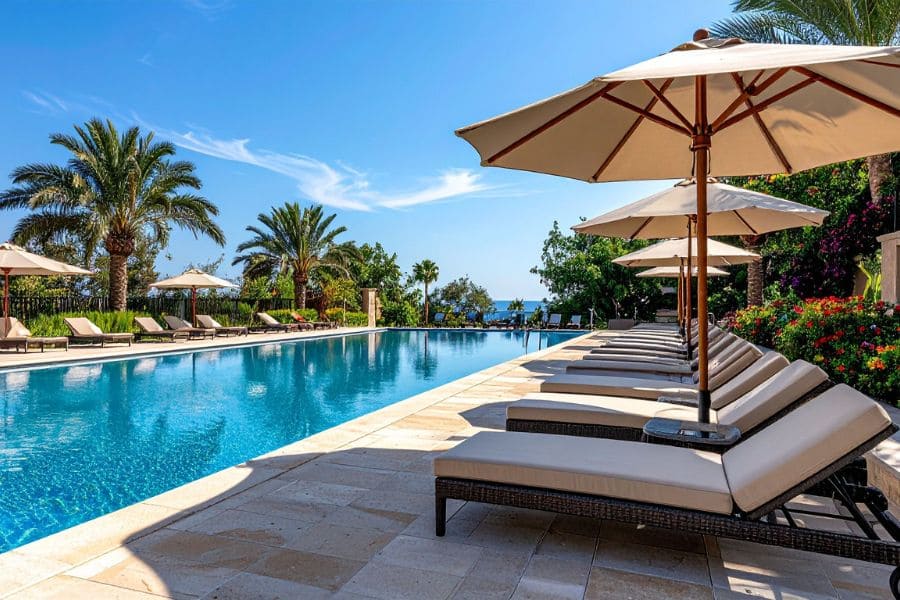
Personalization at Scale: The region has developed an ecosystem of tour operators and luxury service providers who’ve built their reputation on customization. Vietnam vacation itineraries that cost a fraction of comparable European packages often offer 10x more personalization because the labor economics of the region allow for higher staff-to-guest ratios and more detailed attention to individual preferences.
Culinary Tourism with Substance: The global luxury travel market has identified food as a key driver of premium experiences, and Southeast Asia-with its diverse, sophisticated culinary traditions-has emerged as a culinary tourism powerhouse. High-end travelers can now access private cooking classes with celebrity chefs, exclusive farm-to-table experiences, and curated tasting menus that rival anything available in michelin-starred destinations, often at 30-40% of the cost.
Wellness Integration: Luxury wellness travel is one of the fastest-growing segments globally, and Southeast Asia’s combination of traditional healing practices (Ayurveda, Traditional Chinese Medicine, Thai massage) with modern spa technology creates authentic wellness experiences that feel genuinely transformative rather than just indulgent.
The 2026 Asia-Pacific luxury travel market, which reached $292.36 million in just 2024 and is projected to grow at an 8.6% compound annual rate, reflects this reality: travelers are increasingly sophisticated about WHERE their luxury dollar goes, and Southeast Asia delivers measurable value.
Understanding the Luxury Travel Spectrum in Southeast Asia
Before we dive into strategy, let’s clarify what “luxury travel” actually means in Southeast Asia, because it’s different from traditional luxury market definitions.
True Luxury ≠ Most Expensive
In the traditional luxury industry, premium pricing is often based on scarcity (limited rooms, exclusive locations, celebrity branding). Southeast Asia disrupts this model because:
- Beautiful beachfront properties can be built across multiple destinations, reducing artificial scarcity
- Labor costs enable higher service standards at lower price points
- Competition among quality operators drives prices down while pushing service standards up
- Technology has reduced information asymmetry-you can now easily verify quality through reviews and virtual tours before booking
This means that what costs $2,000+ per night in Switzerland might authentically deliver similar or superior quality at $400-600 per night in Thailand or Vietnam.
The Five Tiers of Southeast Asia Luxury Travel
Understanding these tiers helps you target the right experiences for your budget:
Tier 1: Ultra-Luxury ($1,000+ per night): Think private island resorts, ultra-exclusive villas with personal staff, Vietnam vacation packages that include private helicopters or yachts. Examples: Nihi Sumba, JOALI BEING Maldives, private villas in Phu Quoc.
Tier 2: Premium Luxury ($300-900 per night): High-end resorts and villas with world-class amenities, personalized concierge services, exceptional dining. Examples: Amanoi Vietnam, Four Seasons Koh Samui, Zannier Bãi San Hô.
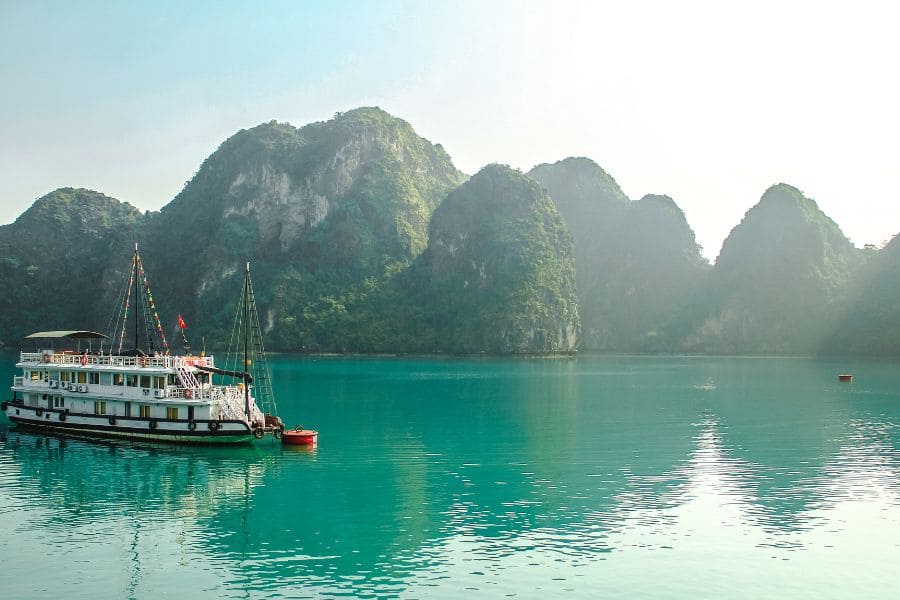
Tier 3: Upper-Middle Luxury ($150-300 per night): Excellent hotels with strong service standards, curated experiences, thoughtful design. Examples: many 4-5 star properties in Hanoi, Siem Reap, Bangkok.
Tier 4: Value Luxury ($75-150 per night): Well-designed 3-4 star hotels, solid service, local experiences, good dining options. Where many savvy travelers find their sweetspot.
Tier 5: Budget-Conscious Access ($40-75 per night): Clean, well-managed accommodations with character, often family-run, strong local connections.
The key insight: Tier 4 experiences in Southeast Asia often deliver Tier 2 quality in other regions, which is why the value proposition is so compelling.
The Architecture of Smart Luxury Travel in Southeast Asia: Strategic Framework
Now that we understand the landscape, here’s how to actually engineer luxury travel experiences that deliver premium quality without premium pricing:
Strategy 1: Duration Arbitrage (The Under-Discussed Secret)
Most luxury travelers in developed markets book 7-10 day trips because taking longer breaks is difficult professionally. This creates higher per-day costs because fixed costs (flights, visa applications, travel research) get compressed into shorter periods.
Southeast Asia’s accessibility changes this equation. Because regional flights are cheap ($30-80 between Vietnam, Cambodia, and Laos), you can extend your trip to 14-21 days while keeping total costs similar to a 7-day trip elsewhere.
Here’s the magic: luxury property operators in Southeast Asia often offer dramatic discounts for week-plus bookings. A villa that costs $500/night for 3 nights might be $350/night for 7+ nights. Over 14 days, that’s a 30% savings while maintaining identical quality.
Pro tip: Work with tour operators who understand duration arbitrage. They’ll structure itineraries that build in lower-cost days (travel days, cultural immersion days) alongside luxury accommodation days, optimizing your experience density and budget efficiency.
Strategy 2: Timing Optimization (Beyond “Peak Season”)
The Asia-Pacific travel market has documented that booking patterns have stabilized into predictable seasonal rhythms. This means strategic timing-beyond just “avoid peak season”-can unlock incredible value.
High-value travel windows in Southeast Asia:
- May-June (post-monsoon in northern regions, pre-peak-summer elsewhere): Lush landscapes, fewer crowds, 15-25% lower prices
- September-October (post-monsoon, pre-peak-season): Incredibly photogenic weather, minimal tourists, 20-30% discounts
- Late January-February (post-holiday rush): Excellent weather, moderate prices, great for river cruises
What to avoid: Mid-December through early January (peak pricing, extreme crowds), monsoon seasons (weather-dependent-research your specific region).
Strategy 3: Operator Selection (The Biggest Value Lever)
This is where 80% of the variance in luxury travel value actually comes from.
Mass-market tour operators and hotel booking sites typically mark up Southeast Asia luxury properties by 40-60% because they’re capturing value from international distribution networks. When you work with boutique, regional tour operators who specialize in the area, you eliminate middleman markups while gaining access to:
- Negotiated rates at luxury properties (they have volume relationships)
- Exclusive experiences unavailable through mass-market channels
- Genuine expertise about what’s worth paying for vs. what’s overpriced
- Ability to customize Vietnam vacation packages in ways that maximize your experience per dollar spent
Red flag operators: Those who refuse customization, use stock photos, have poor reviews mentioning “not as described” experiences, or push generic itineraries.
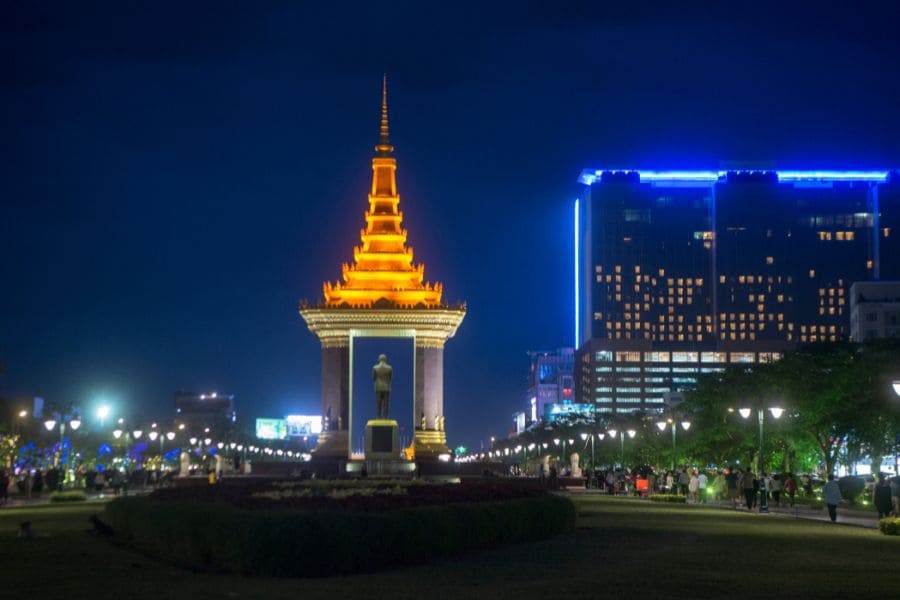
Green flag operators: Those who’ve clearly spent time in the region, can answer detailed logistical questions, show authentic photos, specialize in customization, and have enthusiastic reviews from travelers whose preferences match yours.
Strategy 4: Experience Stacking (Depth Over Breadth)
This is the counterintuitive one: Many luxury travelers try to visit 4-5 countries and 8-10 cities on a single trip. This maximizes their passport stamps but minimizes their actual experiences-and paradoxically, often costs MORE due to transportation, hotel transition costs, and fragmented attention.
Smarter luxury travel stacks experiences geographically: spend 4-5 days in a single area, diving deep into cultural experiences, allowing for spontaneous discoveries, building relationships with local guides.
Example: 14-day trip to Vietnam could be structured as:
- 3 days Hanoi: Cultural immersion, street food, historic sites
- 3 days Halong Bay/Northern countryside: Nature, remote villages, slower pace
- 3 days Central Vietnam (Hoi An/Da Nang): Beach reset, cultural heritage, local artisan experiences
- 2 days Ho Chi Minh City: Urban energy, museums, reflection
This approach costs similar to the rushed “visit 3 countries in 2 weeks” itinerary but delivers 3-5x the actual experience quality. You’ll have time to recover from jet lag, develop relationships with guides, stumble upon genuine local experiences, and actually absorb what you’re seeing-all hallmarks of genuine luxury travel.
Authentic Luxury Experiences: Where to Actually Spend Your Budget
Now that we understand the framework, let’s talk about where the genuine luxury value is in Southeast Asia:
Culinary Experiences (Outstanding Value Proposition)
Reality: A private cooking class with a renowned Vietnamese chef that costs $150-300 per person would easily run $500-800 in a developed country, yet the quality is often superior because you’re learning techniques refined over generations in a culture where food is central to identity.
Where to invest: Private cooking classes in Hoi An or Hanoi, farm-to-table experiences, private dining in unique settings (rice fields in Bali, riverside in Cambodia).
Where to skip: “Luxury” food tours marketed to tourists-you’ll often get better value and authenticity by finding local guides through word-of-mouth.
Wellness and Spa (The Sweet Spot for Value)
Southeast Asia’s wellness market offers remarkable value because the region has integrated traditional healing practices with modern spa amenities. A comprehensive wellness retreat that combines traditional Thai massage, herbal treatments, and modern spa facilities might cost $100-200/day, compared to $300-500/day for comparable offerings in developed countries.
Where to invest: Multi-day wellness retreats at established properties (Kamalaya Thailand, Amanoi Vietnam), private spa treatments at luxury resorts.
Where to skip: “Wellness tourism” marketed through discount sites-you typically get less experienced practitioners.
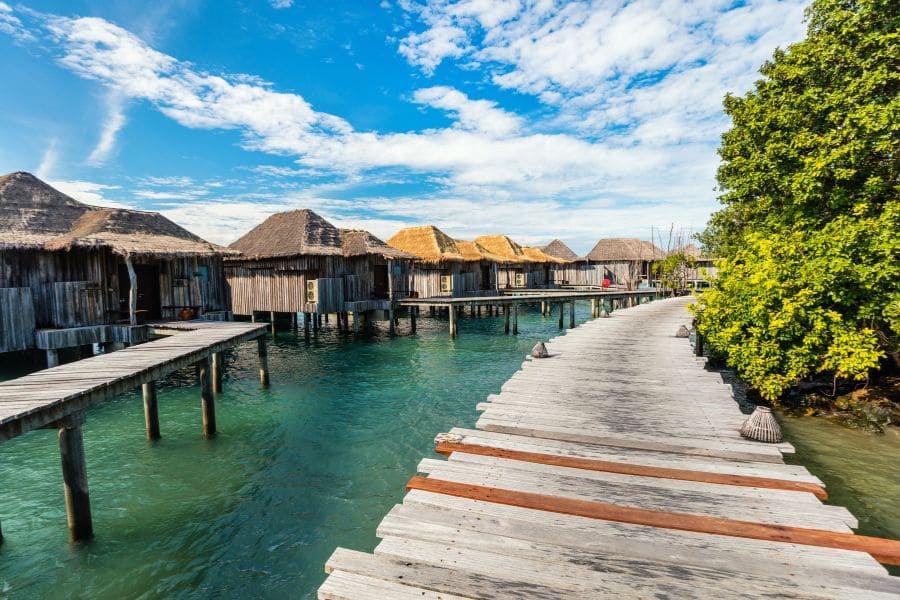
Accommodation (Where Luxury Really Differentiates)
This is where your budget has the most dramatic impact:
Smart luxury accommodation strategy:
- Mix accommodation tiers: Splurge on 2-3 nights at a truly exceptional property (Tier 1 or 2), spend remaining nights at excellent value properties (Tier 3-4) in less famous but equally beautiful locations.
- Longer stays unlock negotiating power: A 7-night stay at a villa or hotel often drops to Tier 4 pricing despite Tier 3-2 quality.
- Location matters less than you think: Many travelers assume they must stay in famous areas. A stunning villa outside Siem Reap’s tourist zone often provides superior experience at half the price of mediocre hotels in the city center.
Private Guiding (Transformative and Underpriced)
Southeast Asia’s private guide market is where luxury travel truly proves its value. For $50-100/day, you can hire knowledgeable, English-speaking guides who provide 5-star experience quality. These guides understand:
- Hidden temples and cultural sites tourists never see
- Local community connections that enable authentic experiences
- How to navigate language barriers and logistics
- Region-specific expertise that transforms generic sightseeing into genuine understanding
Where to invest: Private guides for 3-5 day segments, especially in cultural immersion days.
Where to skip: Large group tours marketed as “luxurious”-you lose all personalization benefits that make Southeast Asia special.
Practical Strategies: Building Your Luxury-on-Budget Itinerary
Here’s a framework for actually constructing these itineraries:
Step 1: Define Your Luxury (What Actually Matters to You?)
Luxury means different things. Some people want:
- Solitude and nature: Private beaches, remote properties, minimal crowds
- Cultural immersion: Deep local connections, learning opportunities, authentic experiences
- Culinary adventure: Food-focused travel, cooking classes, market exploration
- Wellness and recovery: Spa, meditation, health-focused retreats
- Adventure with comfort: Activities (diving, hiking, cycling) with excellent logistics and accommodation
- Efficiency and ease: Minimal planning, everything handled, stress-free logistics
Your specific definition dramatically impacts budget allocation. Someone seeking solitude might splurge on private island resorts ($600+/night) while cutting back on activities. Someone seeking cultural immersion might invest in private guides ($100/day) while staying at modest 3-star hotels ($60-80/night).
Step 2: Select Your Region and Duration
As discussed, longer trips and strategic timing unlock value. A reasonable framework:
- Budget: $100-150/day total (accommodation + experiences + guides)
- Mid-range: $200-300/day total
- Premium: $400-600/day total
- Ultra-luxury: $800+/day total
These budgets should accommodate all costs except international flights.
Step 3: Work with Specialized Operators
This is non-negotiable. Boutique operators who specialize in your region and can customize itineraries will deliver 2-3x better value than booking accommodations independently or using mass-market platforms.
Step 4: Embrace Spontaneity (Within Structure)
Build your itinerary with key experiences locked in, but leave 30-40% flexibility for spontaneous discoveries. Many of the best luxury experiences in Southeast Asia come from local recommendations, meeting fellow travelers, stumbling upon festivals or events, or simply having time to explore without rushing.
The 2026 Luxury Travel Landscape: What’s Changing
As we navigate 2026, several trends are reshaping luxury travel in Southeast Asia:
Sustainability as Standard: High-end travelers increasingly expect and demand eco-conscious operations. Properties implementing conservation initiatives, organic farm-to-table dining, and community benefit programs are gaining premium positioning.
Wellness Integration: The era of purely hedonistic luxury is fading. Modern luxury travel integrates wellness-from sleep optimization to stress reduction-into experiences.
Personalization at Scale: AI and data are enabling operators to customize experiences in ways previously impossible. The best operators are using technology to understand preferences while maintaining personal touch.
Slow Travel Philosophy: Luxury travelers increasingly value depth (fewer destinations, more time) over breadth (maximum countries visited). This actually enables better value-you can invest more per day in fewer locations.
Bleisure Dominance: The line between business and leisure is blurring. Flexible itineraries that accommodate remote work are becoming standard in luxury offerings.
Common Mistakes Luxury Travelers Make (And How to Avoid Them)
Mistake 1: Assuming expensive = better
The most expensive resort isn’t always the best. Often it’s the most expensive to market. Smaller, lesser-known properties frequently offer superior value.
Mistake 2: Booking accommodations and experiences independently
This creates inefficiency, misses negotiating power, and increases risk of misalignment between your expectations and reality.
Mistake 3: Rushing through destinations
More countries ≠ better vacation. Depth creates memory and meaning; rushing creates exhaustion and Instagram photos that don’t match reality.
Mistake 4: Skipping private guiding
Guides are force multipliers for experience quality. Skipping them to save $80/day often costs you hundreds of dollars in missed experiences and mistaken choices.
Mistake 5: Ignoring reviews but trusting marketing
The best information comes from detailed reviews from travelers whose preferences match yours-not marketing language.
Real Examples: What Luxury Actually Looks Like
Example 1: The Cultural Immersion Approach
- Duration: 12 days Vietnam
- Investment: $2,400 total (flights separate)
- Breakdown: 3 nights excellent Hanoi hotel ($80/night), 2 nights homestay in northern village ($40/night), 3 nights boutique Hoi An property ($100/night), 2 nights Ho Chi Minh City ($70/night), plus private guide ($80/day x 8 days = $640), cooking class ($250), private car ($60/day x 8 days = $480), experiences ($350)
- Quality: 5-star experience, deeply authentic, high personalization
- Cost per day: ~$200
Example 2: The Wellness Retreat Approach
- Duration: 14 days Thailand-Cambodia-Laos
- Investment: $3,200 total
- Breakdown: 7 nights wellness resort Thailand ($180/night = $1,260), 4 nights boutique Siem Reap property ($90/night = $360), 3 nights Luang Prabang ($70/night = $210), wellness treatments ($400), private guide ($60/day x 10 days = $600), meals ($370)
- Quality: 4-5 star experience, integrated wellness, moderate personalization
- Cost per day: ~$230
Conclusion: The Future of Luxury Travel is Here
Southeast Asia isn’t just a budget luxury destination-it’s genuinely redefining what luxury travel means in 2026. By combining smart strategies (duration, timing, operator selection, experience stacking), clear prioritization of what luxury means to you, and willingness to work with specialists, you can access genuinely transformative experiences at a fraction of what you’d pay for mediocre luxury elsewhere.
The future of high-end travel isn’t about booking the most expensive resort or visiting the most countries. It’s about maximizing meaning per dollar spent, prioritizing depth over breadth, integrating wellness and sustainability, and choosing operators who understand that true luxury is invisible-you simply have an extraordinary experience without any stress about logistics, expectations, or value.
The good news? Southeast Asia makes this framework easier than anywhere else on Earth.
Ready to Experience Premium Indochina Travel?
Whether you’re seeking cultural immersion, wellness-focused restoration, culinary adventures, or the perfect blend of all three, working with tour operators who specialize in Vietnam vacation packages and customized multi-country itineraries makes the difference between a good trip and an genuinely transformative experience.
The region’s greatest asset isn’t its low prices-it’s that you can access world-class quality with personalized attention and authentic cultural experiences. We specialize in exactly this: creating luxury travel experiences that deliver premium quality without premium pricing.
Your next adventure is waiting.
0 Comment